
A rifle sling is the most underappreciated piece of gear in a hunter’s kit. Most shooters treat it as an afterthought, grabbing whatever cheap strap comes bundled with their rifle case and calling it done. That’s a mistake. A properly chosen rifle sling does three things: it carries your rifle comfortably over long distances, it stabilizes your shot when you don’t have a bench or bipod, and it keeps your firearm secure when both hands need to be free. The wrong sling does none of those well.
In this blog post we will walk you through everything you need to know to choose a rifle sling that actually works in the field. We’ll cover types, materials, mounting systems, shooting-aid techniques, and honest product recommendations based on what we stock and trust at Victory Ridge Sports.
A Rifle Sling Is Not Just a Carry Strap
Most hunters think of a sling the way they think of a shoelace. It holds something in place and you forget about it. But a quality rifle sling is a functional tool that directly affects your comfort, your safety, and your accuracy. Understanding what a sling actually does changes how you shop for one.
The Three Jobs of a Rifle Sling: Carry, Stabilize, Secure
The primary job is obvious. A sling lets you carry a 7 to 10 pound rifle across rough terrain without tying up both hands. Over a 10-kilometre backcountry hike, the difference between a properly fitted padded sling and a thin nylon strap is the difference between arriving at your glassing spot fresh or arriving with a burning shoulder and cramped hands.
The second job is less obvious and far more valuable. A rifle sling, used correctly, becomes a shooting aid that physically stabilizes your rifle in standing, kneeling, and sitting positions. Techniques like the hasty sling and loop sling create mechanical tension between your body and the rifle, removing muscle tremor from the equation. Competitive marksmen and military shooters have used these techniques for over a century. Most recreational hunters have never tried them.
The third job is safety. A slung rifle stays pointed in a safe direction, stays off the ground, and stays with you when you’re climbing a tree stand, crossing a fence, or navigating a steep drainage. Dropping a loaded rifle is never acceptable, and a quality sling with reliable hardware eliminates that risk.
Why Most Hunters Buy the Wrong Sling
The most common mistake is buying based on price alone. A $12 nylon strap with stamped metal swivels will carry your rifle from the truck to the stand. But it won’t stay on your shoulder during a stalk, it won’t stabilize your shot when a buck appears at 180 yards without warning, and the hardware will eventually fail at the worst possible moment. The second most common mistake is buying a sling that doesn’t match your mounting hardware, your rifle type, or the way you actually hunt. A tactical quick-adjust sling designed for an AR-15 is not the right choice for a walnut-stocked bolt action, and a heavy padded leather sling built for all-day mountain carries is overkill for a 200-metre walk to a tree stand.
Rifle Sling Types Explained: One-Point, Two-Point, and Three-Point
Before you choose a material, a brand, or a price point, you need to understand the three basic sling configurations. Each one attaches differently and serves a different primary purpose.
One-Point Slings: Fast Access, Limited Stability
A single-point sling connects to the rifle at one attachment point, typically near the stock or receiver. The sling loops over your head and dominant shoulder, letting the rifle hang freely in front of your body. This design excels at one thing: fast weapon presentation in close-quarters scenarios. You can snap the rifle to your shoulder instantly and transition between shoulders without adjusting anything.
The downside is significant for hunters. A one-point sling provides zero shooting stability, lets the rifle swing and bounce while walking, and offers no weight distribution across your body. It’s a tactical tool designed for entry teams and home defence, not for carrying a hunting rifle through the bush.
Two-Point Slings: The Best All-Around Choice for Hunters and Shooters
A two-point sling attaches at the front and rear of the rifle, creating a stable, balanced carry platform. You can sling the rifle over one shoulder, muzzle-up or muzzle-down, carry it across your body, or cinch it tight against your chest for hands-free movement through dense terrain. Two-point slings also double as shooting aids when wrapped around the support arm using hasty sling or loop sling techniques.
For hunting, target shooting, and field carry in Canada, the two-point sling is the correct choice for the vast majority of shooters. It’s simple, versatile, and effective. Every serious hunting sling on the market, from budget nylon to premium leather, uses a two-point configuration.
Three-Point Slings: Niche Use, Not Worth the Complexity
Three-point slings wrap around both the rifle and the shooter’s body using a figure-eight configuration. In theory, they combine the security of a two-point with the weapon retention of a one-point. In practice, they’re complicated to install, prone to tangling in clothing and gear, and difficult to transition in and out of quickly. Military units that adopted three-point slings in the early 2000s largely abandoned them within a few years in favour of modern quick-adjust two-point designs. For hunters, there’s no practical reason to choose a three-point sling.
| Sling Type | Attachment Points | Carry Comfort | Shooting Stability | Complexity | Best For |
| One-Point | 1 (rear) | Poor | None | Simple | Tactical/CQB only |
| Two-Point | 2 (front + rear) | Excellent | High (with technique) | Simple | Hunting, shooting, all-around |
| Three-Point | 2 + body wrap | Moderate | Moderate | Complex | Niche military use |
5 Rifle Slings That Are Best For Every Shooter
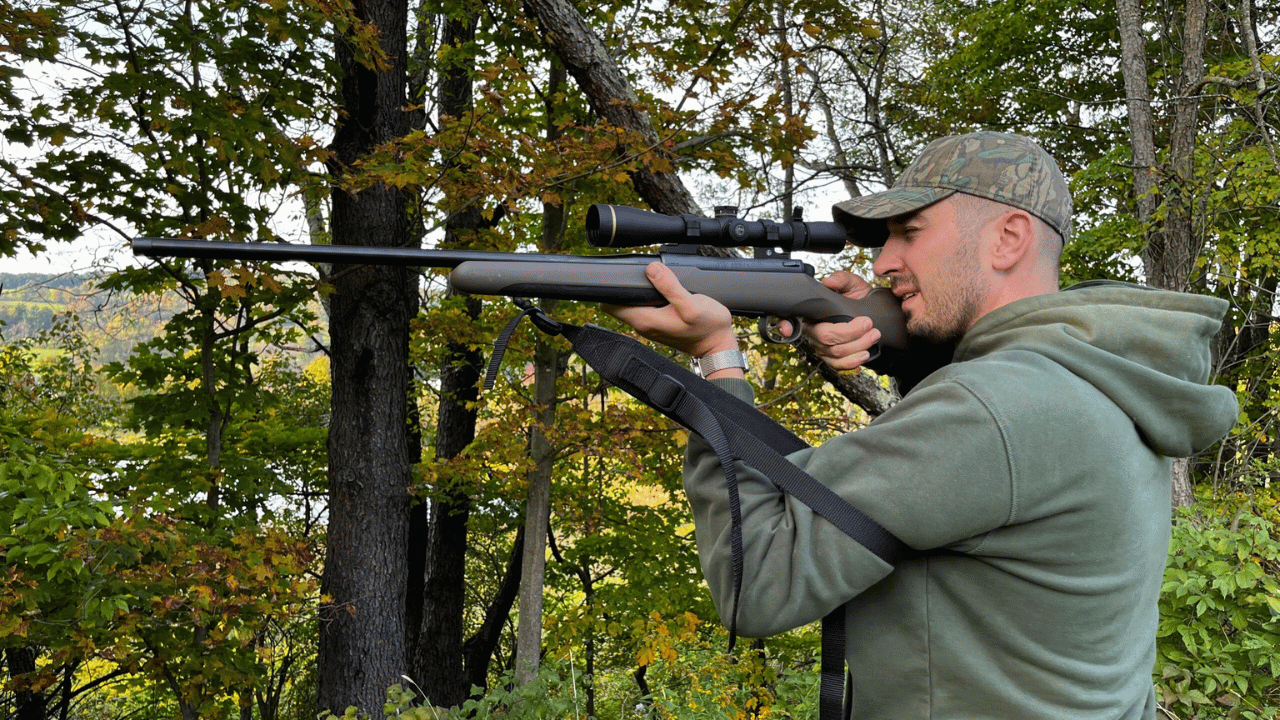
We carry a wide selection of rifle slings from brands we believe in, but these five cover every use case and budget a Canadian shooter will encounter. Three are from Armageddon Gear, designed by former Special Operations soldiers and competition shooters using American-sourced materials. Two are from Magpul, the industry standard for reliable, affordable tactical accessories. All five are available now at Victory Ridge Sports.
1. Armageddon Precision Rifle Sling w/QD — Best for Precision Shooters and PRL Competitors
Price: $159.95 CAD
The Precision Rifle Sling is built for shooters who need a sling that transitions from patrol carry to a supported shooting position without missing a beat. Armageddon Gear’s proprietary bungee webbing absorbs the bounce and weight of rifles up to 20 pounds, reducing felt carry weight without any manual adjustment. The real standout feature is deployment speed. You can sling in to a fully supported shooting position and unsling in under five seconds, which is faster than any traditional webbing sling on the market. For PRL competitors, precision rifle hunters, and anyone who uses their sling as a genuine shooting aid rather than just a carry strap, this is the gold standard. QD swivels make attachment and removal instant.
2. Armageddon Convertable Carbine Sling w/QD — Most Versatile Tactical Option
Price: $139.95 CAD
The Convertable Carbine Sling bridges the gap between a hunting sling and a tactical quick-adjust. It features the same proprietary bungee webbing as the Precision model, meaning you can cinch it tight against your body for a secure carry and snap to a shooting position without loosening anything. Where it differs is the adjustment system, which is optimized for fast length changes during dynamic shooting and transitions. If you run a modern sporting rifle, a non-restricted semi-auto, or a short-barreled bolt action for bush hunting, this sling handles the speed and versatility those platforms demand. Made in America with the same Special Operations pedigree as every Armageddon Gear product.
3. Armageddon Carbine Sling w/QD — Best Mid-Range Tactical Sling
Price: $119.95 CAD
The standard Carbine Sling strips back to the essentials while keeping the build quality and materials that define Armageddon Gear. You get a durable, quick-adjust two-point design with QD swivels and enough bungee stretch for comfortable carry without the bulk of a fully padded sling. It’s lighter and slimmer than the Convertable, which makes it a strong match for lighter carbines and rimfire rifles where you don’t need maximum padding. At $119.95, it sits at the entry point of the Armageddon Gear lineup and delivers significantly better materials, hardware, and longevity than any comparably priced tactical sling on the Canadian market.
4. Magpul MS1 Sling — Best Value Quick-Adjust Sling
Price: $56.95 CAD
Magpul’s MS1 is the sling you buy when you want reliable quick-adjust functionality without spending over $60. Built around Magpul’s proprietary MS1 slider, it offers rapid length adjustments with no slipping once set and no loose tails or loops to snag on gear. The 1.25-inch nylon webbing is strong, anti-chafe, and treated with Near Infrared reduction for tactical applications. It supports seamless shoulder transitions and works in both two-point and one-point configurations with optional adapters (QD swivels or Paraclip, sold separately). Tested through tens of thousands of cycles in wet, dry, and sandy conditions. Made in the USA and Berry Amendment compliant. For shooters who want Magpul quality at a budget-friendly price, the MS1 is hard to beat.
5. Magpul RLS Rifleman Loop Sling — Best Budget Shooting Sling for Marksmanship
Price: $34.95 CAD
The RLS is Magpul’s answer to the classic USGI shooting sling, reimagined with modern materials and a simpler adjustment system. It’s designed specifically as a marksmanship aid, not just a carry strap. The loop sling configuration lets you wrap your support arm through the sling to create rigid, bone-supported stability from prone, sitting, and kneeling positions. At just 4.4 ounces, it’s the lightest sling on this list and adds virtually no bulk to your rifle. If you’re a hunter or target shooter who wants to learn sling-supported shooting without a major investment, the RLS at $34.95 is the smartest entry point available. Pair it with your bolt action hunting rifle and start building real field accuracy.
How to Use a Rifle Sling as a Shooting Aid
This is the section most sling guides skip entirely, and it’s the most important reason to invest in a quality rifle sling. A sling wrapped correctly around your support arm creates mechanical tension that locks the rifle into your shoulder, dramatically reducing wobble and muscle fatigue. It turns a shaky standing shot into a confident, repeatable one.
The Hasty Sling Technique: Field Stability in Under 3 Seconds
The hasty sling is the fastest way to gain stability from a standard two-point carry sling. With your rifle slung, push your support arm forward between the sling and the rifle so the sling wraps around the outside of your forearm. Pull the rifle into your shoulder. The sling now creates tension from the front swivel, around your arm, and into the buttstock. This tension stabilizes the rifle without any adjustment to the sling length.
The hasty sling won’t give you benchrest precision, but it meaningfully steadies standing and kneeling shots. It’s the technique every hunter should learn because it works with whatever sling you already have and deploys in seconds when a deer steps out unexpectedly. Practice it during your shooting practice sessions until the motion becomes automatic.
The Loop Sling: Maximum Precision from Prone and Sitting
The loop sling is more involved but delivers significantly more stability. Detach or loosen the rear sling connection, create a loop around your support-side bicep, then reattach and tension the sling. Your arm is now locked into a rigid triangle between the sling, your body, and the rifle. This method is used in NRA High Power competition and military marksmanship courses because it provides near-benchrest stability from field positions. The tradeoff is setup time. Looping up takes 10 to 15 seconds, which makes it impractical for snap shots but ideal when you have time to set up on a bedded animal or a known shooting lane.
Which Positions Benefit Most from Sling Support
Sling-supported shooting is most effective from sitting and prone positions, where your elbows are already braced and the sling simply locks everything in place. Standing benefits from the hasty sling but less dramatically, since there’s no elbow support beneath the rifle. Kneeling falls in between. The key takeaway is that a rifle sling doesn’t just carry your gun. It makes you a better shot if you learn to use it. No other $50 to $100 accessory delivers that kind of return.
Rifle Sling Materials: What Holds Up in the Canadian Field
The material your sling is made from determines its durability, comfort, weather resistance, noise level, and how it performs in cold conditions. Not all materials work equally well in a Canadian November.
Nylon and Webbing
Nylon webbing is the most common sling material on the market. It’s affordable, tough, weather-resistant, and dries quickly when wet. Quality nylon slings with reinforced stitching will last for years without significant wear. The downside is comfort on bare skin and under heavy loads. Thin nylon webbing can dig into your shoulder over long carries, especially with heavier rifles. Width and padding make the difference.
Leather
Leather slings offer a classic look, excellent durability, and a natural grip on clothing that synthetic materials can’t match. Quality leather, particularly buffalo or bridle leather, develops a patina over time and actually improves with use. The downsides are break-in time, slightly higher weight, and the need for occasional conditioning to maintain suppleness. For bolt action hunting rifles with traditional wood stocks, leather is the gold standard.
Neoprene and Padded Composites
Padded slings with neoprene or foam inserts provide the best comfort for heavy rifles carried over long distances. They distribute weight across a wider area of your shoulder and absorb some of the bouncing motion during a walk. The tradeoff is bulk. Padded slings are thicker and heavier than simple webbing, which matters if you’re counting ounces for a backcountry pack hunt.
Which Material Is Quietest in Cold Weather?
Cold weather changes how materials behave. Stiff nylon webbing can click against metal hardware when it contracts in freezing temperatures. Leather remains supple and quiet. Neoprene-backed materials grip fabric silently. If you hunt in temperatures below minus 10, noise from your sling hardware and material is a genuine consideration that most buyers never think about. Slings with shark-skin or textured rubber backing on the shoulder pad are the quietest options in cold conditions because they grip your jacket without sliding or clicking.
Sling Mounting Hardware: The Compatibility Factor Most Buyers Miss
The best sling in the world is useless if it doesn’t attach to your rifle. Before you buy, you need to know what mounting system your rifle uses.
QD (Quick Detach) Swivels
Push-button QD swivels are the modern standard. They lock into QD cups machined into the stock and forend of most modern bolt actions and sporting rifles. Attachment and detachment takes one second with a button press. If your rifle has QD cups (small round receptacles with a spring-loaded ball detent), buy a sling with QD swivels. Most quality slings offer this option.
Traditional Sling Studs and Wood Screw Mounts
Older bolt actions and many lever actions use wood screw studs threaded into the stock. These accept traditional sling swivels that loop over the stud and lock with a friction nut. The system is simple, reliable, and has worked for decades. If your rifle has protruding threaded studs, look for slings with Grove Tech or standard swivel attachments.
How to Check What Your Rifle Already Has Before Buying
Before ordering a sling, flip your rifle over and look at the forend and the bottom of the stock near the toe. If you see small round flush-mounted cups, you have QD mounts. If you see protruding threaded studs, you have traditional mounts. If you see nothing, your rifle may need aftermarket sling studs or a barrel band adapter installed before a sling can be attached. Knowing this before you buy saves a frustrating return.
Matching Your Rifle Sling to Your Rifle Type
Different rifles benefit from different sling configurations. What works on a modern sporting rifle won’t necessarily work on a lever action, and what’s perfect for a lightweight mountain rifle may be overkill on a rimfire trainer.
Bolt Action Hunting Rifles
Bolt actions are the most common hunting rifle platform in Canada, and they pair best with a quality two-point sling that doubles as a shooting aid. A padded leather or hybrid sling with quick adjustment and a non-slip shoulder pad is the ideal match. The sling should be wide enough for comfort (1.25 inches minimum) but not so bulky that it interferes with working the bolt. Slings with an integrated thumb loop give you added control when carrying muzzle-up through rough terrain.
Lever Action Rifles
Lever actions have a unique challenge: the lever itself can catch on loose sling material during the carry-to-shooting transition. Choose a low-profile, snag-free sling without excess webbing or dangling adjustment tails. A slim two-point with traditional swivel mounts keeps things clean and functional.
Semi-Auto and Modern Sporting Rifles
Quick-adjust tactical two-point slings with QD attachments are the standard for semi-autos. The ability to cinch the rifle tight against your body for movement and then instantly loosen it for shooting is essential for dynamic shooting sports and predator hunting. Look for slings with a rapid pull-tab adjuster.
Rimfire and .22 Trainers
Lightweight and simple is the rule. A heavy padded sling on a 5-pound rimfire is unnecessary bulk. A basic 1-inch nylon two-point or a slim webbing sling keeps the weight balanced and the setup practical for training and small game hunting.
Choosing a Rifle Sling by Hunting Scenario in Canada
The terrain you hunt and how you hunt it should drive your sling choice as much as the rifle you carry.
Stand and Blind Hunting
If you drive to a stand and sit for hours, you don’t need a heavily padded expedition sling. You need something quick to put on and take off that keeps your rifle secure during the climb and quiet once you’re settled. A slim, adjustable two-point with QD swivels lets you detach the sling entirely when it’s not needed and reattach in seconds.
Spot-and-Stalk in Open Country
Alberta prairie and Saskatchewan grain fields mean long walks with your rifle. Comfort and weight distribution are the priority. A padded sling with non-slip backing and quick length adjustment lets you cover ground without constantly readjusting. The sling should also transition to a shooting-support position quickly for opportunistic shots.
Backcountry and Mountain Hunting
Every ounce matters when you’re hiking into BC’s high country with a full pack. Choose a lightweight, weather-resistant sling that compresses against your rifle when stowed on a pack and deploys quickly when the rifle comes off. Built-in stretch or bungee sections reduce the jarring bounce of a rigid sling on steep terrain. This is where premium slings earn their price.
Dense Bush and Thick Timber
Ontario and New Brunswick hardwoods, Manitoba spruce bogs, and BC coastal rainforest all share one problem: everything snags. Your sling needs to be snag-free, quiet, and short enough to keep the rifle tight against your body when pushing through brush. Wide, floppy slings with loose adjustment tails are a liability in thick cover.
Common Rifle Sling Mistakes and How to Avoid Them
Even experienced hunters make avoidable errors with their sling setup. Here are the ones we see most often.
Buying a Sling That Doesn’t Fit Your Mounting Hardware
This is the most common return we process. A shooter buys a sling with QD swivels for a rifle that only has traditional studs, or vice versa. Always check your rifle’s attachment points before ordering. If you’re unsure, bring the rifle into the shop or send us a photo and we’ll confirm compatibility.
Never Practising the Transition from Carry to Shooting Position
A sling you’ve never practised deploying is a sling that will fail you when it matters. Before hunting season, spend 10 minutes in your living room (with a cleared, safe rifle) practising the transition from your preferred carry position to a shouldered, sling-supported shooting stance. Time yourself. The goal is a smooth, quiet transition in under five seconds.
Ignoring Noise
Metal-on-metal contact between sling hardware and rifle creates clicks and clinks that carry further than you think in cold, still air. If you hear your sling clicking during a quiet stalk, the deer heard it too. Quality slings use coated or padded hardware connections that eliminate metal contact. Cheap slings don’t. This alone is worth the upgrade.
Our Top Rifle Sling Picks for Canadian Hunters in 2026
After covering the fundamentals, here are the slings we trust and stock at Victory Ridge Sports. We’ve focused on Armageddon Gear because their slings are designed by former Special Operations soldiers and competitive precision rifle shooters, manufactured entirely in the United States from domestically sourced materials, and built to a standard that most mass-market slings simply don’t meet. They’re not the cheapest option, but they’re the last sling you’ll buy.
If you’re building your first hunting setup and every dollar matters, a basic 1.25-inch nylon two-point sling with standard swivels gets the job done for under $30 CAD. It won’t offer the non-slip grip, shooting-aid features, or durability of an Armageddon Gear sling, but it carries your rifle and keeps it secure. Consider it a placeholder until you’re ready to invest in gear that lasts. Brands like Magpul and HQ Outfitters offer solid budget options in this range, and we carry both at Victory Ridge Sports.
FAQ: Rifle Slings
What is the best type of rifle sling for hunting?
A two-point sling is the best type for hunting. It provides balanced carry, doubles as a shooting aid, and works with virtually every rifle platform. For most Canadian hunters, a padded two-point with quick-adjust capability and QD or traditional swivel attachments is the ideal setup.
Can a rifle sling improve shooting accuracy?
Yes. Techniques like the hasty sling and loop sling create mechanical tension between your body and the rifle, significantly reducing wobble in standing, kneeling, and sitting positions. Competitive marksmen and military shooters have used sling-supported techniques for over a century.
What width rifle sling is most comfortable?
Slings between 1.25 and 1.5 inches wide offer the best balance of carry comfort and shooting practicality. Wider slings (2 inches) distribute weight better for heavy rifles but can feel bulky. Narrower slings (1 inch) are lighter but dig into the shoulder under load.
Do I need QD swivels for a rifle sling?
QD swivels are not strictly necessary, but they make attaching and detaching your sling fast and effortless. If your rifle already has QD cups built in, take advantage of them. If your rifle uses traditional studs, a Grove Tech or standard swivel sling works perfectly.
How much should I spend on a rifle sling?
A basic functional sling costs $15 to $30 CAD. A quality padded two-point with reliable hardware runs $50 to $90 CAD. Premium slings from brands like Armageddon Gear that offer proprietary materials, shooting-aid functionality, and lifetime durability typically fall between $80 and $150 CAD. If you plan to keep your rifle for a decade or more, the premium sling pays for itself in comfort, performance, and gear you never need to replace.
What makes Armageddon Gear slings different from other brands?
Armageddon Gear slings are designed by former Special Operations soldiers and competitive precision shooters, and manufactured in the United States using domestically sourced materials. Their Hunter’s Rifle Sling features buffalo leather with shark-skin non-slip backing, and their Precision Rifle Sling uses proprietary bungee webbing that reduces felt rifle weight and allows sling-in deployment in under five seconds. Both are built to outlast the rifle they’re mounted on.