
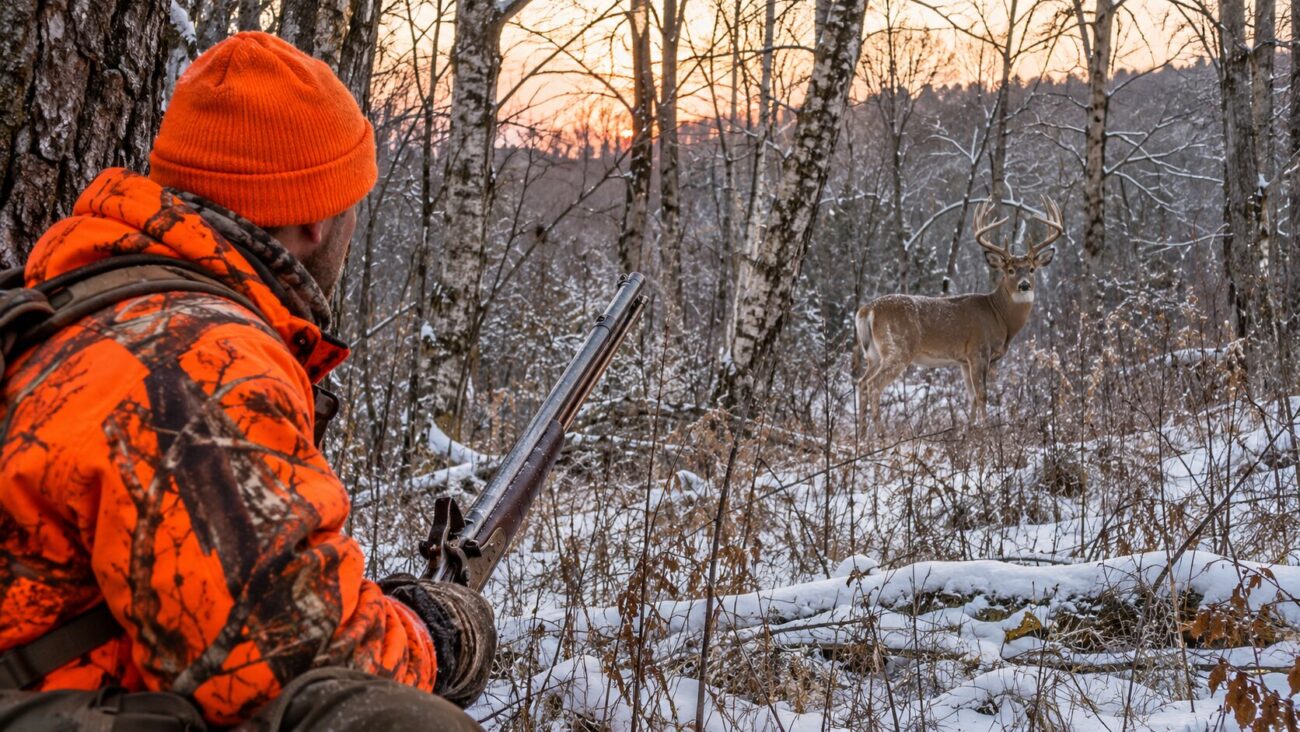
Ontario’s muzzleloader deer season gives hunters one more week in the woods after the regular gun season closes. In many wildlife management units (WMUs) across central and northern Ontario, the 2026 muzzle-loader and bow season runs from November 30 to December 6. It lines up with the second rut, cold weather and deer that have already been pushed hard for a month. This guide covers the dates, the rules that are different for muzzle-loading guns, and how to hunt that last week well.
Key Takeaways
- The 2026 muzzle-loader and bow deer season runs November 30 to December 6 in many WMUs, including 36, 37, 42, 43A, 43B, 45, 59 to 75, 82A, 83A and 84.
- Some southern WMUs (6, 7B, 8, 9A, 9B and 11A) had an earlier window, October 3 to 9, which has already closed.
- A percussion muzzleloader counts as loaded when powder and a projectile are in the barrel and a cap is on the nipple.
- Dogs are not allowed during muzzle-loader and bow seasons, except in WMUs 7A, 18B and 59.
- Your deer hunter report for 2026 is due January 14, 2027, even if you did not fill your tag.
When Is Muzzleloader Season in Ontario in 2026?
Ontario’s 2026 muzzleloader deer season runs from November 30 to December 6 in many central and northern WMUs, for both residents and non-residents. Bows are also legal during this season. A few southern units ran their muzzle-loader and bow window earlier, from October 3 to 9. Dates are set by WMU, so always confirm your exact unit.
Here is how the 2026 dates break down, based on Ontario’s tentative dates for the deer and moose hunting seasons:
| WMUs | Muzzle-loader and bow season (2026) | Notes |
|---|---|---|
| 36, 37, 42, 43A, 43B, 45, 59 to 75, 82A, 83A, 84 | November 30 to December 6 | Residents and non-residents |
| 6, 7B, 8, 9A, 9B, 11A | October 3 to 9 | Already closed for 2026 |
| 7A | October 3 to December 15 (residents) | Longer season, check unit details |
| Controlled hunt units (76 to 94) | Split dates, often November 30 to December 4 or 6 | Hunt codes and validations apply |
The season dates on ontario.ca are listed as tentative, and the official white-tailed deer section of the Hunting Regulations Summary is the final word. If you are not sure which unit you hunt, our guide to Ontario hunting zones and how to find your WMU walks you through it.
What Counts as a Loaded Muzzleloader in Ontario?
A muzzleloader in Ontario is considered loaded based on its ignition type, not just on whether there is a charge in the barrel. A percussion muzzleloader is loaded when powder and a projectile are in the barrel and a percussion cap is on the nipple. This matters any time you carry, cross a road or get into a vehicle.
Ontario’s general hunting regulations define a loaded muzzle-loading gun this way:
| Ignition type | Considered loaded when | How to make it unloaded |
|---|---|---|
| Percussion (cap) | Powder and projectile in the barrel, and a cap on the nipple | Remove the cap |
| Flintlock | Powder and projectile in the barrel, and the vent is unplugged | Plug the vent |
| Electronic ignition | Projectile in the barrel and a battery connected to the primer or charge | Disconnect the battery |
Most modern in-line muzzleloaders use a 209 shotgun primer instead of a traditional cap. Treat the primer the same way you would treat a cap: if it is in the gun with a charge behind it, assume the gun is loaded. In large parts of central and northwestern Ontario, you cannot have a loaded firearm on or near a public road during an open deer gun season, so pull the cap or primer before you walk out to the truck.
Do You Need Hunter Orange During Muzzleloader Season?
Yes, plan to wear hunter orange during Ontario’s muzzleloader season. Ontario requires all licensed hunters, including bow hunters, to wear hunter orange during a gun season for deer, elk or moose, and a muzzle-loading gun is a gun. That means a solid orange garment covering at least 400 square inches above the waist, visible from all sides, plus an orange head cover.
Late-season woods are open and grey, and other hunters are out with both bows and muzzleloaders that week. Our guide to hunter orange rules in Ontario covers exactly what counts, including ground blinds and what does not qualify, such as camo orange and mesh. You can find vests and hats in our blaze orange collection.
Can You Use a Bow During Muzzleloader Season?
Yes. Ontario’s late season is a combined muzzle-loader and bow season, so you can hunt deer with either. A bow used for deer must have a draw weight of at least 18 kg (39.7 lb) at a draw length of 700 mm or less. Arrows must be at least 600 mm long with a broadhead at least 22 mm wide and two or more sharp cutting edges.
Those minimums come from Ontario’s general hunting regulations. Cold weather affects bows and shooters alike, so check that you can still draw smoothly while wearing your full set of winter layers before opening morning.
What Are Deer Doing in Early December?
In early December, most Ontario deer have finished the main rut and switched to recovering and feeding. Bucks that survived the gun season are tired, cautious and focused on food. At the same time, does that were not bred in November come back into estrus about 28 days later, which creates a smaller second rut in early to mid-December.
That combination gives you two good plans for the muzzleloader week:
- Hunt the food. Cold weather pushes deer to the best remaining food, such as standing corn, cut fields and fresh browse in cutovers. Late afternoon sits near these spots are often the most productive.
- Watch for second-rut activity. A buck following a doe across a field in December is not unusual. A doe bleat or soft grunt can still pull a buck in during this window.
Our post on the deer rut in Ontario explains each phase of the rut, including the post-rut, and how to adjust your setup.
How Do You Hunt Deer With a Muzzleloader in Cold Weather?
Hunting with a muzzleloader in Ontario’s cold weather comes down to keeping your powder dry, getting reliable ignition and making your one shot count. Most muzzleloaders give you a single shot before a slow reload, so shot selection and preparation matter more than they do with a repeating rifle or shotgun.
Before the season
- Sight in with your hunting load. Use the same powder charge and projectile you plan to hunt with, and confirm your zero at the range you expect to shoot.
- Know your effective range. Only take shots inside the distance where you can group consistently from a field position, not just off a bench.
- Clean the bore fully. Remove any oil from the barrel and breech plug before loading for the hunt, because oil can cause a misfire.
- Pre-measure loads. Carry two or three pre-measured charges and projectiles in speed loaders so a reload does not mean fumbling with cold hands.
In the field
- Protect the muzzle and the breech. Snow and freezing rain can reach the charge. A muzzle cover or a strip of electrical tape over the muzzle helps keep moisture out.
- Watch condensation. Moving a cold gun into a warm truck or camp can cause condensation inside the barrel. Many hunters leave the gun cased in a cold place overnight instead.
- Wait for the right shot. A broadside or slightly quartering-away deer is the best opportunity for a clean kill. Our guide to where to shoot a buck covers shot placement in detail.
- Unload at the end of the day. Some hunters fire the gun at a safe backstop, others pull the projectile. Either way, remove the cap or primer before you head to the road.
A good set of binoculars helps you pick out a deer standing still in grey timber long before it sees you. Take a look at our optics range.
What Should You Pack for a December Muzzleloader Hunt?
A December muzzleloader hunt in Ontario needs gear for long, cold sits plus the extra tools a muzzle-loading gun requires. The list below covers the essentials beyond your licence, tag and hunter orange.
| Item | Why it matters in December |
|---|---|
| Caps or primers in a dry container | Damp caps or primers are a common cause of misfires |
| Speed loaders with pre-measured charges | Faster, safer reloads with cold fingers |
| Ramrod and short starter | Needed to seat a follow-up projectile |
| Muzzle cover or electrical tape | Keeps snow and rain out of the barrel |
| Insulated layers, hat and gloves | Lets you sit long enough for deer to move |
| Hand warmers | Keeps your trigger hand working |
| Knife and field-dressing kit | See our knives and axes |
| Headlamp | Short December days mean walking out in the dark |
Legal hunting hours in Ontario run from half an hour before sunrise to half an hour after sunset. In early December that is a short day, so plan your walk in and out around it.
What Do You Have to Do After You Fill Your Tag?
After you kill a deer in Ontario, you must immediately notch the day, month and time on your tag at the kill site, before you move the animal. You must also submit a deer hunter report for the 2026 season by January 14, 2027, even if you did not harvest a deer or did not hunt at all.
Ontario is moving to a new licensing system called FishHuntON, which launches on December 10, 2026. The current Fish and Wildlife Licensing Service will be offline from December 7 to 9. If your season ends on December 6, it is worth submitting your hunter report before the outage. For the full process, read our step-by-step guide on how to tag and report your deer in Ontario.
Frequently Asked Questions
When does muzzleloader season start in Ontario in 2026?
In many central and northern Ontario WMUs, the 2026 muzzle-loader and bow deer season starts on November 30 and ends on December 6. A few southern WMUs, including 6, 7B, 8, 9A, 9B and 11A, ran an earlier window from October 3 to 9. Season dates are set by WMU, so check your exact unit in the Hunting Regulations Summary.
Can I use a rifle during muzzleloader season in Ontario?
No. Ontario’s muzzle-loader and bow season is only open to muzzle-loading guns and bows. Centrefire rifles and shotguns are for the regular gun season in your WMU. If you carry a modern firearm during a muzzle-loader and bow season, you are hunting outside the rules for that season.
Do I need a separate licence for muzzleloader season?
Ontario does not sell a separate muzzleloader licence for deer. You need a valid Outdoors Card, a deer licence and a deer tag that is valid for your WMU and the season you are hunting. Controlled hunt units also require a validation. Our Ontario buck tag guide explains the costs and deadlines.
Can I use dogs during the muzzleloader season?
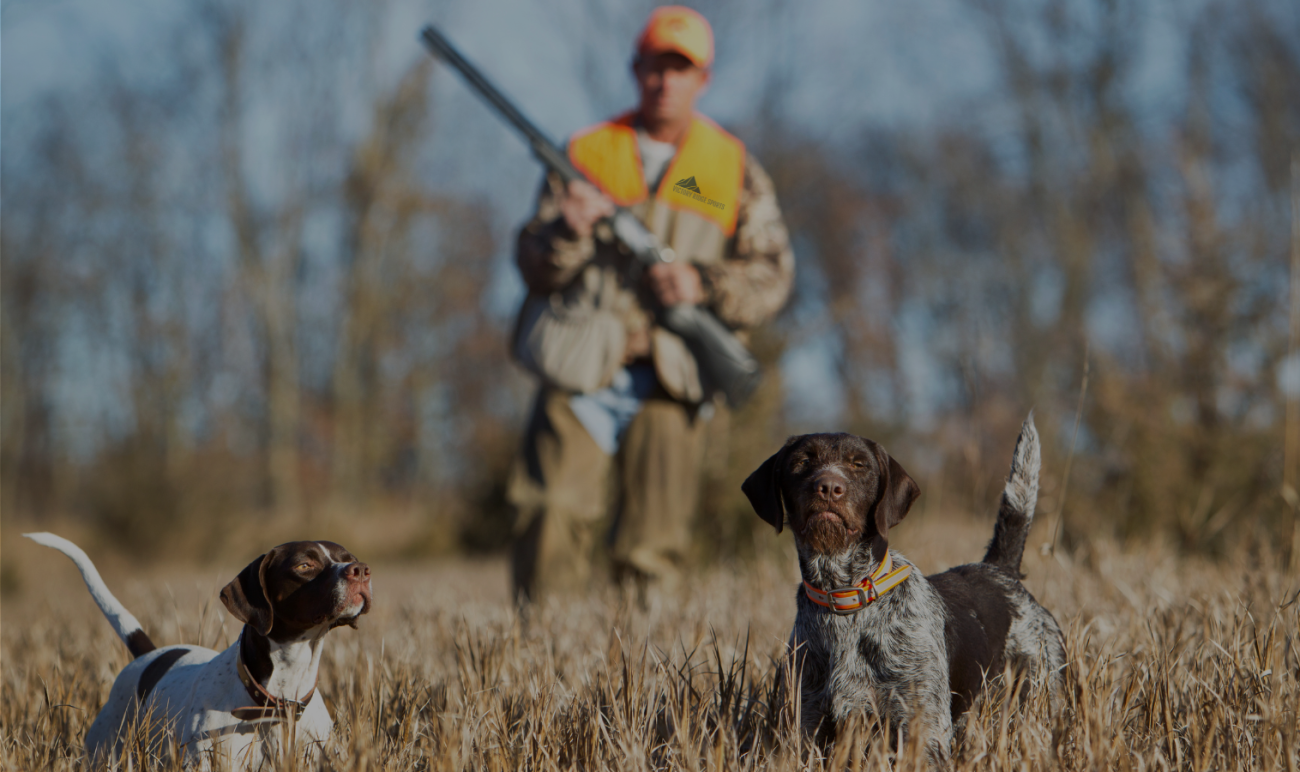
No, not in most of Ontario. Dogs are not allowed during muzzle-loading and bow seasons, except in WMUs 7A, 18B and 59. Check the regulations summary for any other rules that apply to dogs in those units.
Is the muzzleloader season worth hunting in Ontario?
For many hunters, yes. There is usually less pressure in the woods than during the regular gun season, and the second rut can bring bucks back on their feet in early December. Deer are warier after the gun season, so quiet entries, food-focused stands and patience pay off.
Gear Up for the Late Season
Victory Ridge Sports is a Canadian hunting and target sports store at 431 Bayview Drive, Unit #3, in Barrie, Ontario. We carry blaze orange, optics, knives and the cold-weather layers that make a long December sit possible. Visit the showroom, call us at 1-705-252-4400, or shop online.
This article is a summary for planning purposes only. Always check the current Ontario Hunting Regulations Summary and your WMU’s rules before you hunt.