
To clean and store your rifle after hunting season, unload it, clean the bore and bolt, dry every part, coat the metal with a thin layer of oil, and lock it away unloaded in a dry room, apart from your ammunition. This routine takes about an hour and stops winter rust before it starts.
Key takeaways
- Clean your rifle fully at the end of the season, not in spring. Fouling, blood and moisture cause rust over winter.
- Dry every part, then use a thin coat of oil. Too much oil collects dust and thickens in the cold.
- Store the rifle in a heated, dry room. Damp basements and garages are the most common cause of winter rust.
- Never store a rifle in a soft case for months. Soft cases hold moisture against the metal.
- In Canada, a non-restricted rifle must be stored unloaded, locked or disabled, and away from readily accessible ammunition (SOR/98-209, 1998).
What is post-season rifle maintenance?
Post-season rifle maintenance is the full cleaning, drying, oiling and secure storage you give a hunting rifle after the last hunt of the year. It removes fouling, moisture and residue that cause rust and pitting during months in storage, and it keeps the rifle legal and ready for next season.
It is different from the quick wipe-down you do after each outing. A field wipe deals with surface water. A post-season clean goes into the bore, bolt and action, and under the stock where moisture hides.
Why does a full clean matter before winter storage in Canada?
A full clean matters because Canadian hunting seasons end in wet, freezing conditions, and moisture left in a rifle has months to cause rust. Rain, snow, blood and powder fouling all hold water against steel. By spring, a rifle that looked fine in November can show rust in the bore or pitting on the bolt.
Three things make Canadian storage harder:
- Condensation. A rifle brought in from minus 20 into a warm house sweats. Water forms on and inside the metal.
- Seasonal humidity. Basements and garages that feel dry in winter often get damp in spring.
- Long storage. Most rifles sit for nine months or more between seasons.
The best time to clean your rifle is the day you finish hunting, not the day before next season.
How do you clean your rifle at the end of hunting season?
You clean a rifle at the end of the season in seven steps: make it safe, strip it down, clean the bore, clean the bolt and action, dry every part, protect the metal with a thin oil coat, and check your optics and mounts. Always follow your rifle’s manual for strip-down steps.
Step 1: Make it safe
Unload the rifle, open the action, and check the chamber and magazine twice. Move all ammunition to another room before you start.
Step 2: Strip it down
Remove the bolt and the magazine. If you are comfortable doing it, take the action out of the stock so you can reach moisture trapped underneath.
Step 3: Clean the bore
Run a patch wet with bore solvent through the barrel from the chamber end. Let it soak for a few minutes, use a bore brush, then run dry patches until they come out clean.
Step 4: Clean the bolt and action
Wipe away old oil, grime and powder residue. A small brush and a little solvent work well around the bolt face and extractor.
Step 5: Dry everything
Make sure no solvent or water is left, especially under the stock, in the magazine well and around the scope rings.
Step 6: Protect the metal
Wipe a thin film of gun oil or rust preventive on the outside metal, and run one lightly oiled patch through the bore. Too much oil attracts dust and can make the action sluggish in the cold.
Step 7: Check your optics and mounts
Clean lenses with a lens cloth only, and check that the scope ring and base screws are still tight.
Muzzleloader hunters: clean your muzzleloader the same day you finish hunting. Black powder and many substitutes leave residue that pulls in moisture and rusts the bore fast. See our guide to the Ontario muzzleloader season.
How do you store a rifle over a Canadian winter?
You store a rifle over a Canadian winter by keeping it clean, lightly oiled, unloaded and locked in a dry, heated room, out of its soft case. Moisture is the main enemy, so where you store it matters as much as how well you cleaned it.
- Pick a dry room. A heated room inside the house is usually safer than a basement or garage.
- Let it warm up first. When you bring a rifle in from the cold, let it reach room temperature, then wipe it down before you lock it away.
- Skip the soft case. Soft cases are for transport. Over months, the padding holds moisture against the metal.
- Store it muzzle down if you oiled the bore. This stops extra oil from running back into the action and stock.
- Check it once a month. A quick look and a wipe with an oily cloth will catch rust early.
What are the legal storage rules for a rifle in Canada?
In Canada, a non-restricted rifle or shotgun must be stored unloaded, made inoperable with a secure locking device or by removing the bolt, or kept in a locked container or room that cannot readily be broken into, and kept away from readily accessible ammunition. These rules come from the federal Storage, Display, Transportation and Handling of Firearms by Individuals Regulations (SOR/98-209), made in 1998 under the Firearms Act.
| Rule | What it means for you |
|---|---|
| Unloaded | No round in the chamber or the magazine. |
| Locked or disabled | Use a trigger or cable lock, remove the bolt, or store it in a locked cabinet, container or room. |
| Ammunition | Keep ammo where it is not readily accessible, or lock it in the same sturdy container as the rifle. |
Canadian rule: restricted and prohibited firearms have stricter storage rules than non-restricted rifles. Read our full guide to firearm storage rules in Canada.
What do you need to clean and store your rifle?
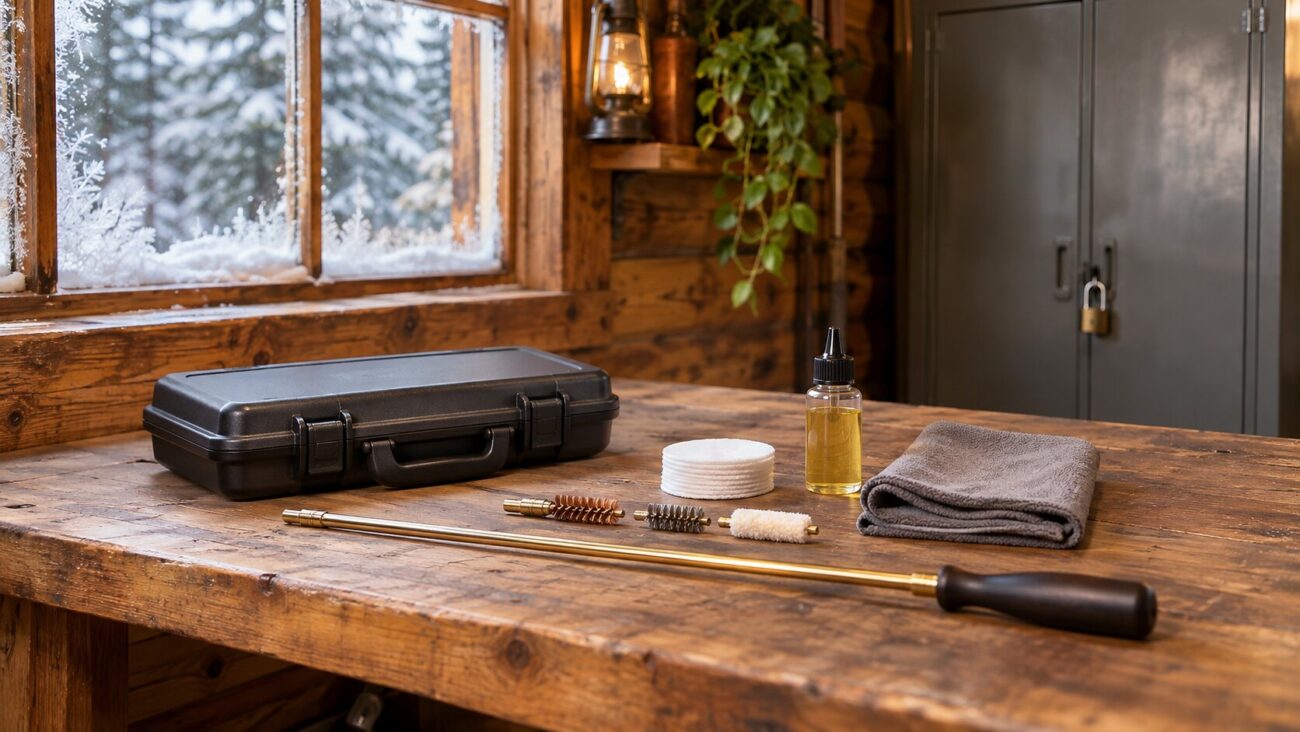
You need a bore solvent, gun oil or rust preventive, patches, a cleaning rod with brushes, and a lock, cabinet or safe that meets the federal storage rules. Most hunters can cover everything with one cleaning kit and one storage option.
| You need | Why | Shop |
|---|---|---|
| Bore solvent, gun oil and rust preventive | Remove fouling and protect the metal | Cleaners & lubricants |
| Patches and cloths | Push solvent through the bore and wipe down metal | Patches & cloths |
| Cleaning rod, brushes and kit | Reach the full length of the bore | Cleaning & maintenance tools |
| Trigger or cable lock | Meets the locking rule for one or two rifles | Cable & trigger locks |
| Gun cabinet or safe | Stores several firearms and keeps ammo locked in one place | Cabinets & safes |
| Lockable ammo box | Covers the ammunition rule | Ammo boxes |
| Hard case | Safe transport to the range or next hunt | Cases & range bags |
What are the most common rifle storage mistakes?
The most common rifle storage mistakes are storing a rifle dirty, using too much oil, leaving it in a soft case, and keeping it in a damp basement or garage. Each one lets moisture or grime sit on the metal for months.
- Waiting until spring to clean. Fouling and moisture do their damage over the winter.
- Over-oiling. Heavy oil traps dust and can run into the stock.
- Soft case storage. Fine for the drive home, bad for six months.
- Storing loaded or unlocked. This is unsafe and against federal law.
- Forgetting the scope. Loose ring screws are easier to catch now than at the range.
Frequently asked questions
How often should you clean a hunting rifle?
You should give a hunting rifle a quick wipe-down after every outing, especially after rain or snow, and a full clean at the end of the season before storage. If you shoot a lot of rounds at the range before the season, clean the bore again before your first hunt.
Should you store a rifle with oil in the barrel?
Yes, a light film of oil in the barrel helps prevent rust during storage. Run one lightly oiled patch through the bore before you put the rifle away. Before you shoot next season, run a dry patch through the bore to remove the oil, because oil in the bore can change your first shots.
Can you store a rifle in a soft case over winter?
It is better not to store a rifle in a soft case over winter. Soft cases hold moisture against the metal and can cause rust over several months. Use a soft case for transport, then take the rifle out and store it in a cabinet, safe, or on a rack in a dry room.
Is it legal to store ammo in the same safe as my rifle in Canada?
Yes. Under SOR/98-209, ammunition for a non-restricted firearm can be stored with the firearm if both are in a container or room that is securely locked and cannot readily be broken into. If the rifle is stored outside a locked container, keep the ammunition where it is not readily accessible.
What is the best place to store a rifle in winter?
The best place to store a rifle in winter is a heated, dry room inside your home, in a locked cabinet or safe. Avoid damp basements, garages and vehicles. Temperature swings cause condensation, and condensation causes rust. Check the rifle once a month and wipe it with an oily cloth if you see any moisture.
How do you stop a rifle from rusting in storage?
You stop a rifle from rusting in storage by cleaning and drying it fully, applying a thin coat of oil or rust preventive, storing it in a dry room out of soft cases, and checking it once a month. A dehumidifier rod or desiccant in a gun safe can also help.
Conclusion
Cleaning and storing your rifle properly after hunting season takes about an hour and saves you from rust, pitting and a rifle that won’t hold zero next fall. Clean it fully, dry it, oil it lightly, and lock it away unloaded in a dry room, apart from your ammunition. Follow the federal rules every time.
Need a cleaning kit, cable lock or safe? Shop cleaning and maintenance tools and firearm storage online, call 1-705-252-4400, or visit Victory Ridge Sports at 431 Bayview Dr., Unit #3, Barrie, Ontario.
Related guides: firearm storage rules in Canada · how to buy a gun online in Canada · best bolt-action rifles in Canada