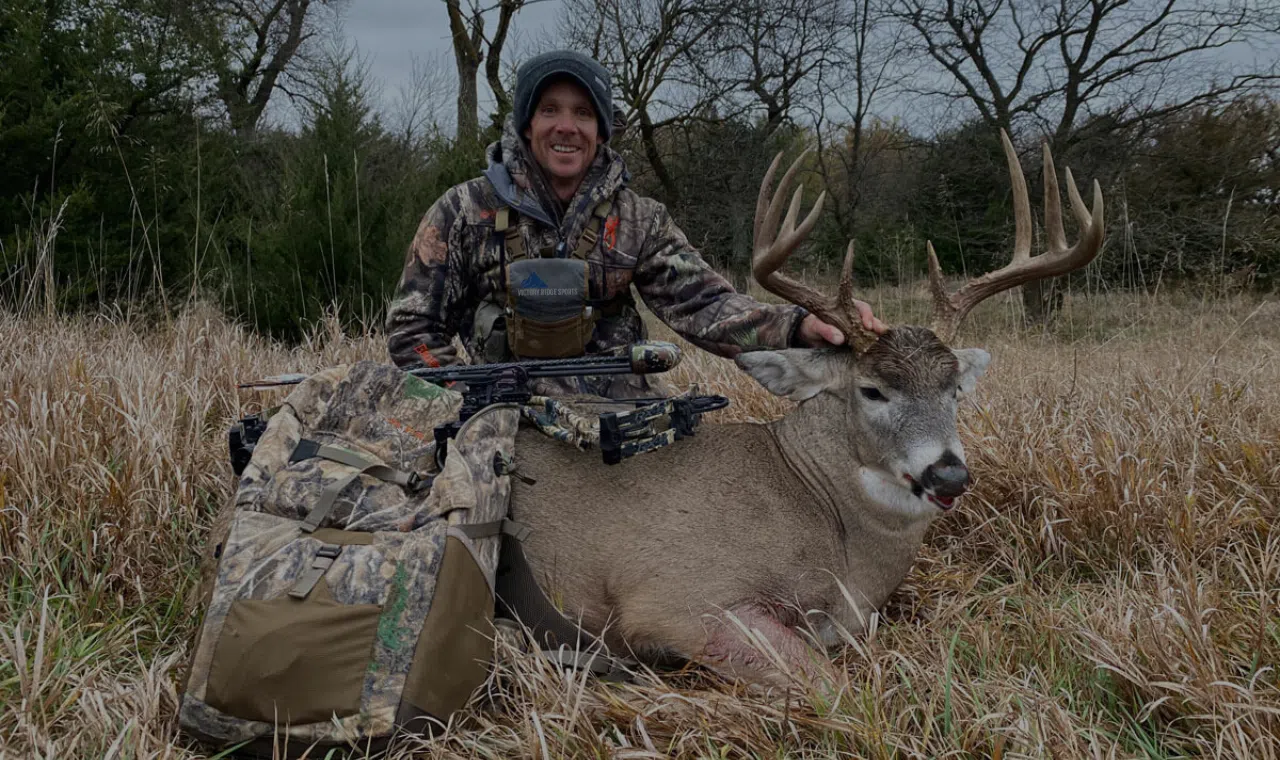

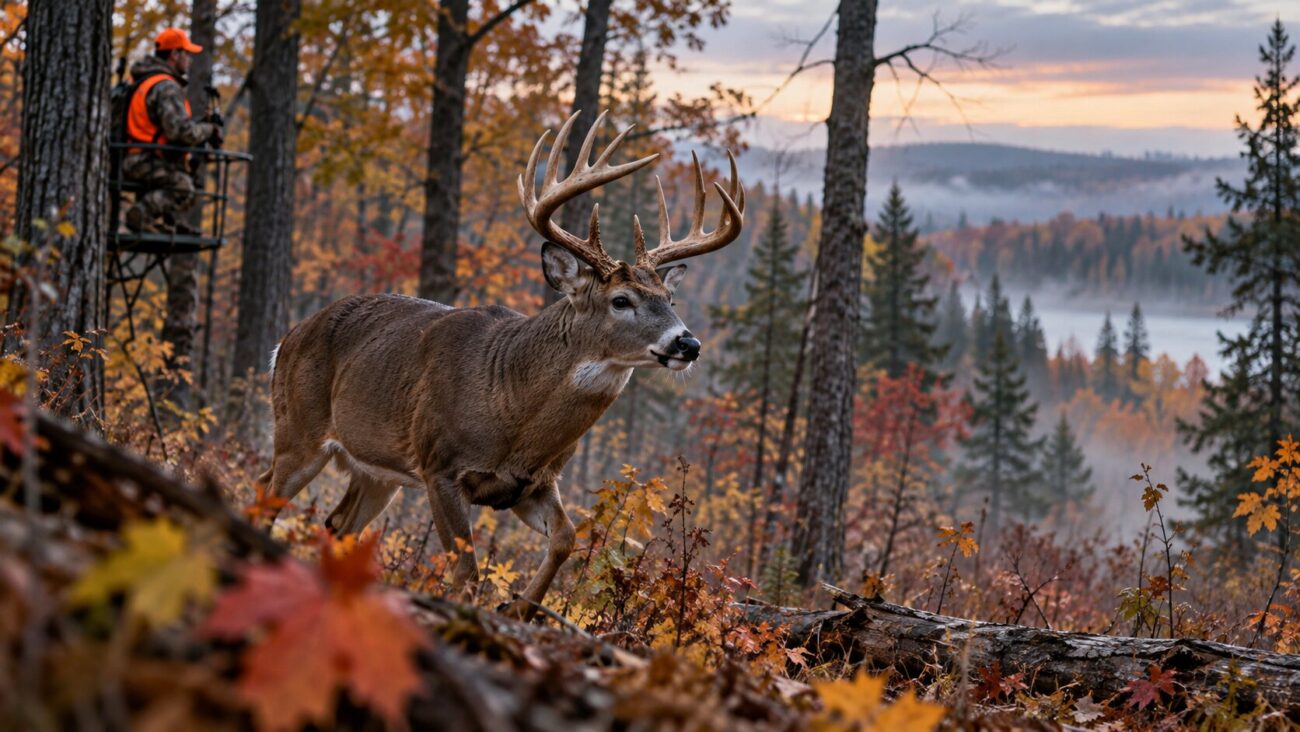
The deer rut is the white-tailed deer breeding season, and in Ontario the most intense part of it, the chase, almost always happens in November. For most of southern and central Ontario, that puts peak rut activity right on top of the November 2 to 15 gun season, which is why the first two weeks of November are the most talked-about days of the year at hunt camp.
Key takeaways
- The rut is the white-tailed deer breeding season. In Ontario, peak chasing and breeding almost always happen in November.
- Pre-rut sign such as rubs and scrapes shows up in mid to late October.
- The 2026 gun season in most southern and central WMUs runs November 2 to 15, overlapping the peak.
- Does that are not bred come back into heat about a month later, so some breeding continues into December.
- Rut bucks move in daylight more than at any other time of year, but they also travel far and fast, so stand placement matters more than calling.
What is the deer rut?
The deer rut is the annual breeding period of white-tailed deer, when bucks search for, chase and breed does that are coming into heat (estrus). During the rut, bucks eat less, travel farther and move more in daylight, which makes it the best window of the year for hunters to see mature bucks.
The rut is not a single day. The Ontario Federation of Anglers and Hunters (OFAH) describes it as a process that can begin as early as August and last up to four months, with the short, intense chase phase being what most hunters mean when they say “the rut.” Antlers harden and velvet comes off in late summer, rubbing and scraping start in the fall, and breeding peaks in November.
When is the whitetail deer rut in Ontario?
The whitetail deer rut in Ontario peaks in November. Pre-rut sign usually appears in mid to late October, full breeding activity generally starts in early November, and the first two weeks of November are the key period, according to Northern Ontario Travel’s rut guide. Breeding can continue well into December.
The exact peak shifts a little from year to year and from one part of the province to another. What stays consistent is the general order of events:
| Phase | Typical timing in Ontario | What you will see |
|---|---|---|
| Pre-rut | Mid to late October | Fresh rubs, new scrapes, bucks sparring, more daytime movement |
| Seeking | Late October to early November | Bucks cruising and checking scrapes, often in daylight |
| Chase and peak breeding | First half of November | Bucks chasing does hard, grunting, less caution |
| Lockdown | Mid November | Bucks stay with one doe for a day or two; sightings can drop |
| Post-rut and second rut | Late November to December | Tired bucks feeding heavily; unbred does cycle again about a month later |
Why does the rut happen in November?
The rut happens in November because white-tailed deer breeding is timed by the shortening days of fall. Falling daylight changes hormone levels in both bucks and does, so does come into heat at about the same time each year. With a gestation of roughly 200 days, a November breeding puts fawns on the ground in late May and June, when food is plentiful.
Weather and moon phase get a lot of credit at hunt camp, but day length is what sets the calendar. Warm weather can push deer movement into the night, so a hot spell during the rut often feels like a slow rut even when breeding is on schedule. A cold front with a hard frost usually brings daytime movement back.
Does the rut line up with Ontario’s 2026 gun season?
Yes. In most of southern and central Ontario the deer gun season runs November 2 to 15, 2026, which covers the seeking and chase phases. The OFAH puts it plainly: the rut is on during every gun hunt in Ontario. Some WMUs open earlier, and WMUs 43A and 43B run November 16 to 22.
Seasons and weapon rules change by WMU, so check yours before you go:
- See our Ontario deer hunting season guide for dates by WMU.
- Not sure which unit you hunt? Use our Ontario hunting zones and WMU guide.
- Hunting an antlered deer? Read how the Ontario buck tag works first.
What are the signs of the rut?
The main signs of the rut are rubs, scrapes, and bucks chasing does in daylight. A fresh rub is a tree or sapling with the bark stripped by a buck’s antlers. A scrape is a patch of ground pawed bare under an overhanging branch, usually with urine in it. As does get close to heat, bucks check their scrapes far more often.
Other signs to watch for:
- Rub lines: a series of rubs along a travel route often marks a buck’s regular path.
- Grunting and tending: a buck grunting while trailing a doe means breeding is close.
- Sudden daytime movement: bucks you never see on camera in October start showing up at midday.
- Fewer buck sightings for a few days: often a sign of lockdown, not that the rut is over.
How do you hunt each phase of the rut?
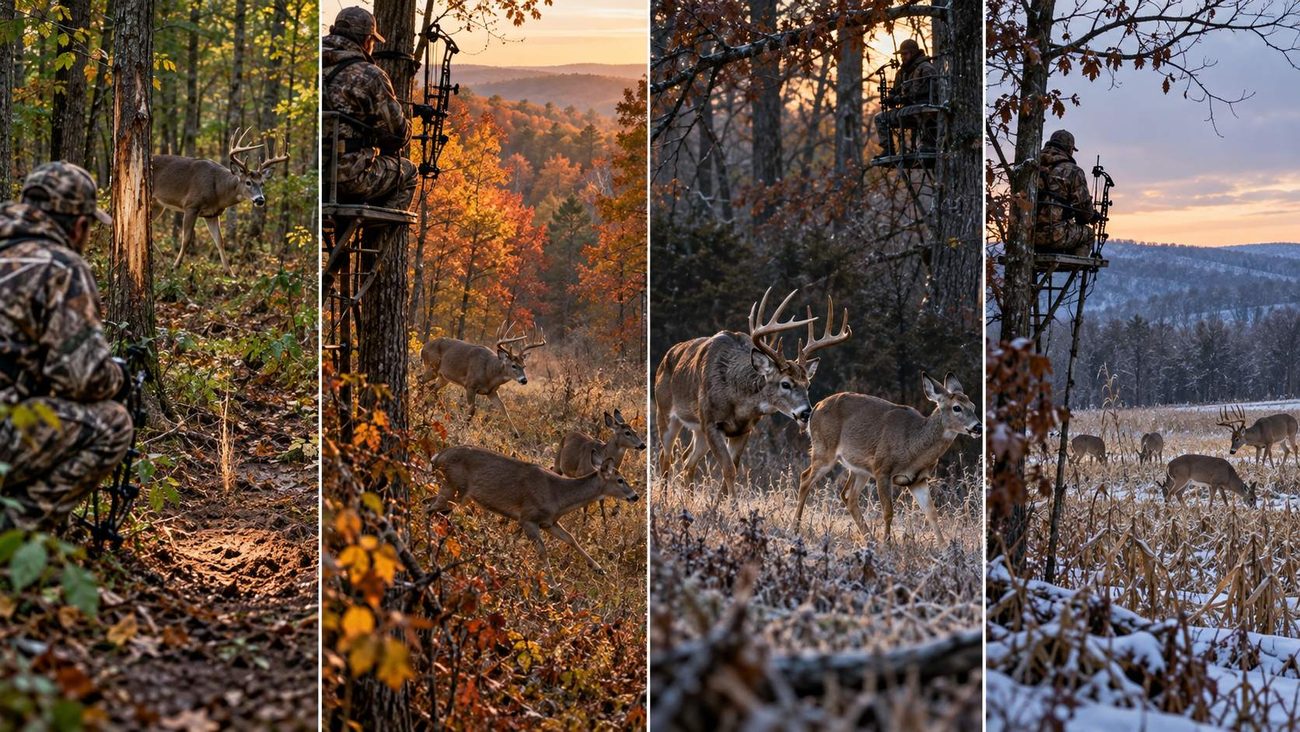
The best way to hunt the rut is to match your setup to the phase. Early on, hunt near fresh scrapes and rub lines. During the chase, sit all day on funnels and travel corridors between doe bedding areas. During lockdown and the post-rut, hunt food sources and thick cover where tired bucks recover.
Pre-rut: hunt the sign
Set up downwind of fresh scrape lines and rub lines near the edge of bedding cover. Light rattling and soft grunts can work now because bucks are sparring and establishing dominance.
Chase: sit long and stay put
Bucks can show up at any hour. Funnels, pinch points, creek crossings and fence gaps that connect doe bedding areas are the best stands. This is the time for all-day sits. Good optics help you sort a cruising buck from a young one quickly. Our guide to ED glass binoculars for hunting explains what to look for.
Lockdown: go where the does are
When a buck is tending a doe, it may not leave a small area for a day or two. Hunt close to doe bedding cover and watch for a single doe that seems to be moving oddly, with a buck trailing behind.
Post-rut: hunt the food
Bucks lose a lot of weight during the rut and need to feed. Late-season food sources and thick cover near them are the best bets, especially during the muzzle-loader and bow season from November 30 to December 6 in many WMUs.
How do you stay safe and legal during the rut?
Rut hunting means long hours in the woods during the busiest part of the season, so the basics matter. During any gun season for deer, all licensed hunters, including bow hunters, must wear hunter orange: at least 400 square inches above the waist, visible from all sides, plus an orange head cover. Shooting hours are half an hour before sunrise to half an hour after sunset.
- Read our Ontario hunter orange rules guide for exactly what counts.
- Shotgun hunters must use 20 gauge or larger with SG or No. 1 buckshot or larger. See slug vs buckshot for deer.
- Know your shot placement before the buck shows up: where to shoot a buck.
Frequently asked questions
What is a deer in rut?
A deer in rut is a white-tailed deer in its breeding phase. For bucks, being in rut means chasing does, fighting other bucks, eating less and moving more in daylight. For does, it means coming into heat for about a day, which happens about once a month until they are bred.
When is the peak of the deer rut in Ontario?
The peak of the deer rut in Ontario is usually the first half of November. The chase almost always happens in November, though the exact peak varies by year and by region. Breeding can continue into December as unbred does come back into heat.
Is there a second rut?
Yes. Does that are not bred during their first heat come back into estrus about a month later, so a smaller second rut often happens in early December. Young does born that spring can also come into heat late in the year. The second rut is shorter and less intense than the main rut.
Does weather affect the rut?
Weather does not change when the rut happens, because day length sets the timing. Weather does change when deer move. Warm days push movement into the night, while cold fronts and frost usually bring bucks back into daylight.
What is the best time of day to hunt the rut?
During the chase phase, any time of day can be good, which is why all-day sits pay off in early November. Morning and evening are still the most reliable, but rut bucks are often seen at midday as they cruise between doe groups.
Plan your rut hunt
The deer rut in Ontario peaks in the first half of November, which lines up with the 2026 gun season in most of the province. Watch for fresh scrapes and rubs in late October, sit long on travel corridors during the chase, and shift to food and cover once bucks lock down. Before you head out, check your WMU dates, your tag and your hunter orange.
Getting your gear ready? Victory Ridge Sports in Barrie, Ontario stocks hunting shotguns, binoculars and blaze orange gear, with free shipping over $250 across Canada. Questions? Call 1-705-252-4400 or email info@victoryridgesports.ca.
Sources: Ontario Hunting Regulations Summary: General regulations (2026) · Ontario tentative deer and moose season dates · OFAH: The mysticism of the rut · Northern Ontario Travel: Understanding the whitetail rut