
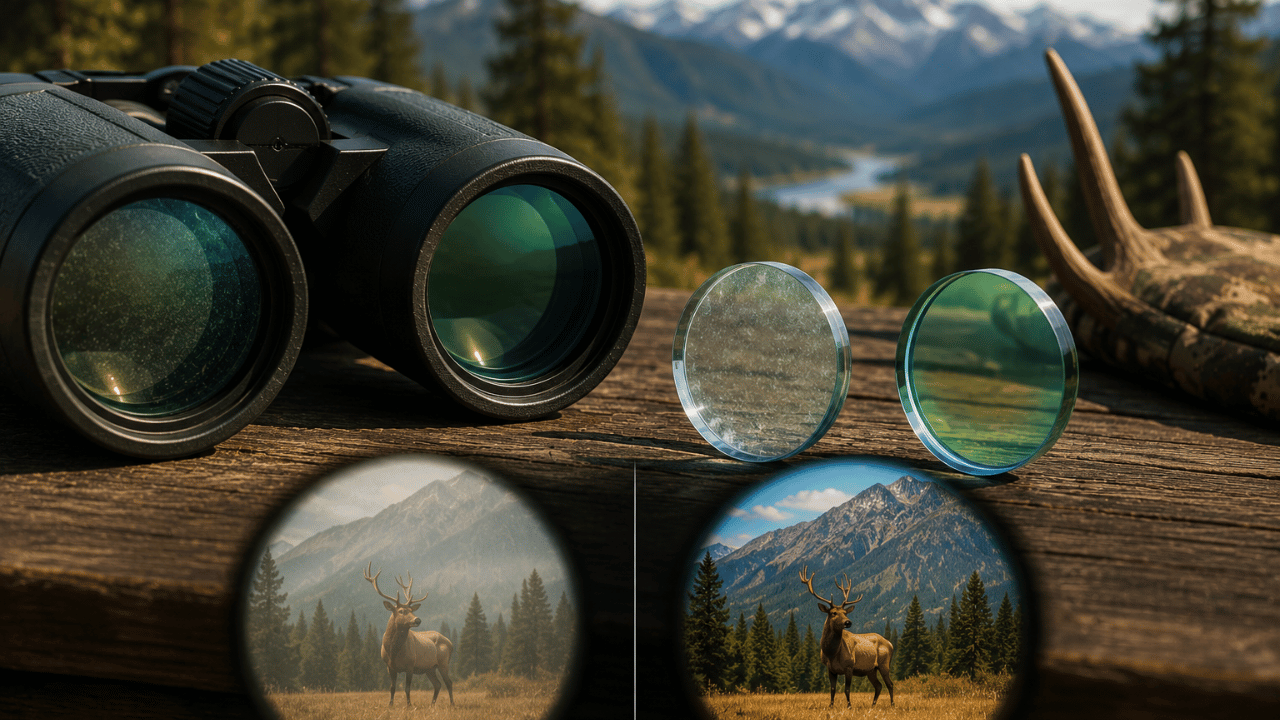
Walk into any Canadian optics retailer and you will see binoculars at $250 and binoculars at $750 with nearly identical specifications on the label — both 8×42, both waterproof, both from the same brand. The difference that justifies the price gap is often two letters: ED. Extra-low Dispersion glass is the single most impactful optical technology separating mid-tier from premium binoculars, and understanding what it actually does — and when it genuinely matters for Canadian hunters — helps you decide whether the upgrade is worth it for your specific situation.
| Quick Answer: ED (Extra-low Dispersion) glass reduces chromatic aberration — the colour fringing visible around high-contrast edges in standard binoculars, most noticeable in low light. For Canadian deer, elk, and moose hunters who glass at dawn and dusk, the difference between standard HD glass (Vortex Diamondback HD, ~$370 CAD) and ED glass (Vortex Viper HD, ~$750 CAD) is real and visible. Whether it justifies double the price depends on how much time you spend glassing in difficult light. |
| Key Facts: Chromatic aberration is caused by different wavelengths of light focusing at slightly different points — creating colour fringe around high-contrast edges• ED glass (Extra-low Dispersion) uses calcium fluoride or fluorite-containing materials that direct all wavelengths to a more common focal point• The biggest performance gap in hunting optics is not magnification — it is glass quality (Field & Stream testing, 2026)• At $300–$500 CAD, you get capable binoculars that perform well in daylight but struggle in low light• At $700–$1,200 CAD (ED glass tier), low-light performance improves noticeably — the critical window when Canadian big game is most active• Vortex Diamondback HD (~$370 CAD): standard HD Optical System; Vortex Viper HD (~$750 CAD): true ED glass elements |
What Is Chromatic Aberration — The Problem ED Glass Solves
To understand why ED glass matters, you need to understand the problem it solves: chromatic aberration. When white light passes through a glass lens, it bends — and different wavelengths (colours) of light bend by slightly different amounts. Red light bends less than blue light. This means different colours focus at slightly different points behind the lens, creating a blurred, colour-fringed image rather than a sharp, true-colour one.
The practical result is what binocular reviewers call colour fringing: a purple, green, or red halo visible around high-contrast edges — a dark tree branch against a bright sky, an animal’s outline against snow, or antlers silhouetted at dusk. This fringing reduces resolution, makes fine detail harder to distinguish, and becomes significantly more pronounced in low-light conditions when the eye’s pupil dilates and the full objective lens aperture is in use.
How Does ED Glass Actually Work?
Extra-low Dispersion glass uses materials — typically calcium fluoride, fluorite-containing compounds, or purpose-formulated optical glass — that have inherently lower dispersion properties than standard optical glass. Lower dispersion means the material bends different wavelengths of light more uniformly — directing red, green, and blue wavelengths to a more common focal point behind the lens.
The result, when ED glass elements are correctly incorporated into the optical design, is a reduction in the secondary spectrum — the residual chromatic aberration that remains even after standard achromatic lens corrections. ED glass binoculars show significantly less colour fringing around high-contrast edges, deliver sharper resolution at the same magnification, and maintain image quality more effectively in low light.
ED Glass vs HD Glass — What’s the Difference?
‘HD’ (High Definition) is a marketing term that different manufacturers apply inconsistently. Some HD binoculars incorporate true ED glass elements — Vortex’s Viper HD, for example, uses genuine ED glass. Others use ‘HD Optical System’ or ‘HD coated lenses’ to describe improved coating quality or select glass elements without true ED material — as in Vortex’s Diamondback HD tier.
| Important: ‘HD’ on a binocular label does not guarantee ED glass. Always check the manufacturer’s specifications page for explicit mention of ‘ED glass’, ‘Extra-low Dispersion elements’, or ‘fluorite glass’ to confirm true ED glass is present. |
Does ED Glass Actually Matter for Canadian Hunters?
The honest answer is: it depends on when and where you hunt.
When ED Glass Matters Most — Low Light Conditions
Deer, elk, and moose in Canada are most active during the first and last 30–45 minutes of legal shooting light — precisely when standard binoculars struggle most with chromatic aberration. At dawn and dusk, the eye’s pupil dilates to approximately 5–7mm, using the full objective lens aperture. Chromatic aberration is most visible when the entire lens diameter is engaged. This is why the practical difference between ED and non-ED binoculars is most apparent exactly during the most critical moments of a Canadian hunting day.
When ED Glass Matters Less — Daylight Glassing
In full daylight — 9am to 3pm — chromatic aberration is less pronounced because the eye’s pupil is constricted and the full lens aperture is not used. For hunters who primarily glass during mid-day, or who hunt in bright conditions on open terrain, quality standard HD binoculars like the Vortex Diamondback HD perform admirably. The difference between ED and non-ED in these conditions, while real, is less immediately visible to most hunters.
When ED Glass Matters for Extended Glassing Sessions
BC mountain hunters pursuing mule deer, sheep, and mountain goat routinely spend 4–6 hours behind binoculars at a single vantage point. In extended glassing sessions, chromatic aberration contributes to eye fatigue — the eye works harder to process a fringed, lower-contrast image than a sharp ED image. Hunters who consistently glass for hours report meaningfully less eye fatigue with ED glass binoculars, which translates directly into more effective game detection over a full day.
ED Glass by Canadian Hunting Application
| Hunting Application | ED Glass Value | Recommendation |
| Ontario/Quebec whitetail — bush, short sessions | Low–Medium | Diamondback HD adequate for most hunters |
| Alberta prairie mule deer — long sessions, open terrain | High | Viper HD worth the investment |
| BC mountain hunting — all-day glassing, alpenglow | Very High | Viper HD or premium tier justified |
| Saskatchewan/Alberta moose — wetland, dawn/dusk | High | ED glass noticeably better at golden hour |
| Waterfowl — short range, quick identification | Low | Standard HD is more than sufficient |
| Ontario turkey hunting — close range, colour important | Medium | ED glass improves colour accuracy for turkey identification |
Vortex ED Glass vs Standard HD — Real World Comparison
For Canadian hunters specifically, the Vortex lineup provides the clearest comparison between ED and non-ED glass at competitive Canadian retail prices. here we focus specifically on the optical difference between tiers.
| Specification | Vortex Diamondback HD 10×42 | Vortex Viper HD 10×42 |
| Glass Type | HD Optical System (select glass elements) | True ED Glass elements |
| Chromatic Aberration | Visible in high contrast, low light | Significantly reduced |
| Prism Coating | Phase-corrected, dielectric | Phase-corrected, dielectric |
| Low-Light Performance | Good — adequate for most hunting | Excellent — noticeably better at dawn/dusk |
| Eye Relief | 15.5mm | 16.5mm |
| Field of View (10×42) | 315 ft/1000 yds | 315 ft/1000 yds |
| Weight | 21.2 oz | 18.9 oz (lighter despite better glass) |
| Canada Price (approx) | ~$370 CAD | ~$750 CAD |
| Warranty | Vortex VIP Lifetime | Vortex VIP Lifetime |
| Best For | Budget-conscious hunters, daylight use | Extended glassing, low light, all-day hunting |
The Viper HD’s weight advantage over the Diamondback HD is notable — the more sophisticated optical design actually produces a lighter binocular at the same specification. This is a common finding at the ED glass tier: better glass technology enables more efficient optical design, which can result in comparable or lower weight despite superior performance.
The Three Binocular Price Tiers for Canadian Hunters
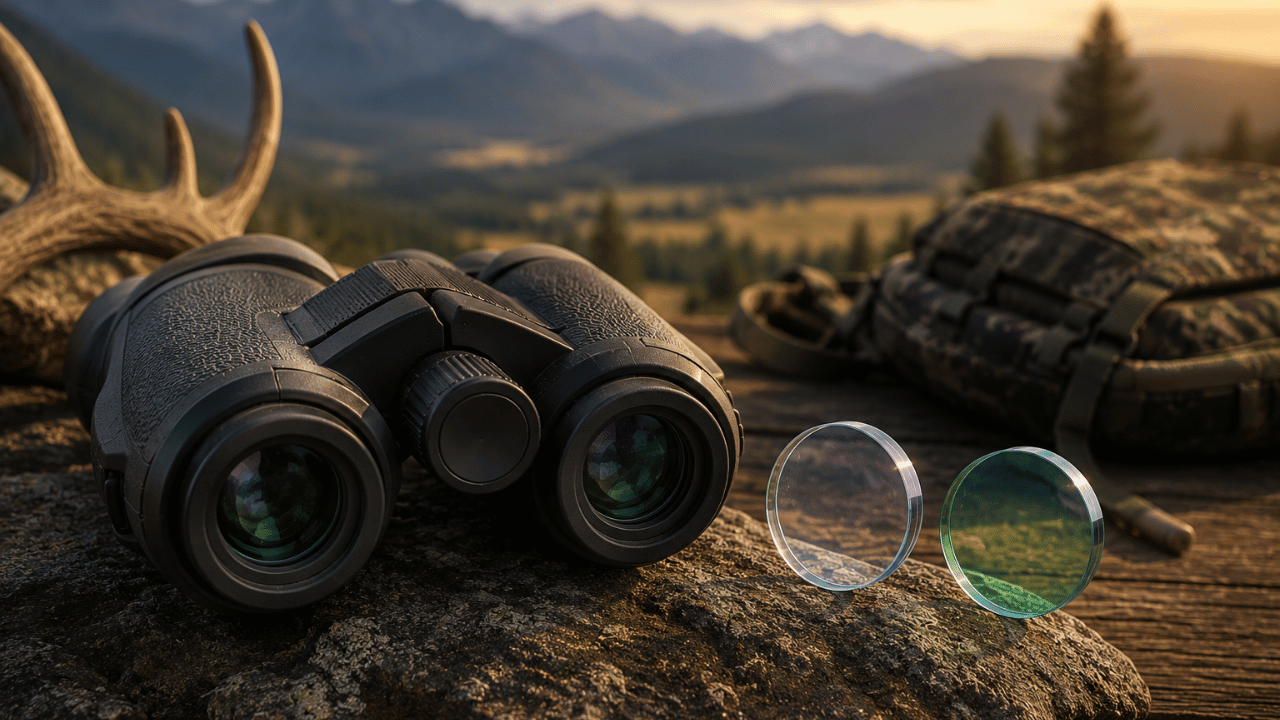
$200–$400 CAD — Standard HD (Vortex Crossfire HD, Diamondback HD)
Standard HD binoculars with quality coatings, BaK-4 prisms, and waterproof construction perform well in daylight and adequately in low light. The correct choice for occasional hunters, first-time buyers, and those who primarily hunt in full daylight conditions. Chromatic aberration is present but manageable in most practical Canadian hunting scenarios.
$600–$900 CAD — ED Glass Entry Tier (Vortex Viper HD, Nikon Monarch M7)
The ED glass entry tier is where most serious Canadian hunters who spend multiple days per season afield land on their second or third binocular purchase. The jump from standard HD to ED glass is the biggest single optical quality improvement per dollar available in the binocular market — more impactful than the jump from ED glass entry to premium tier above. Browse binoculars at Victory Ridge Sports to compare current Canadian availability in this tier.
$1,500–$3,000+ CAD — Premium ED Glass (Swarovski, Zeiss, Leica)
Premium tier binoculars from European manufacturers deliver incremental improvements over ED glass entry tier — better edge-to-edge sharpness, higher light transmission, and more durable construction. The improvement from ED entry to premium is real but smaller per dollar than the standard HD to ED jump. For most Canadian hunters, the Vortex Viper HD tier represents the practical sweet spot of performance and value.
When You Will Notice ED Glass Most in Canadian Conditions
- November Ontario deer season — bare trees create constant high-contrast edge situations where colour fringing is most visible
- BC alpine dawn glassing — the ‘alpenglow’ light before sunrise is exactly the low-light condition where ED glass delivers the most visible improvement
- Alberta prairie glassing for mule deer on overcast days — diffuse light and long distances amplify the resolution advantage of ED glass
- Any Canadian hunting scenario where you glass a dark treeline against bright sky — the most common chromatic aberration trigger in Canadian terrain
For Ontario deer hunting specifically — where November’s bare hardwood forests create constant high-contrast branch-against-sky edge situations — ED glass delivers a visible clarity improvement that standard HD glass cannot match at equivalent magnification.
Frequently Asked Questions
Q: What does ED glass actually stand for?
A: ED stands for Extra-low Dispersion. It refers to optical glass materials — typically containing calcium fluoride or fluorite compounds — that have inherently lower dispersion properties than standard optical glass. Lower dispersion means the glass bends different wavelengths of light more uniformly, reducing the chromatic aberration (colour fringing) that occurs when different colours focus at slightly different points behind the lens.
Q: Can I see the difference between ED and non-ED binoculars easily?
A: Yes, if you know what to look for. Point both binoculars at a dark object against a bright background — a tree branch against sky, power lines against cloud, or a bird on a fence post. Look carefully at the edges of the dark object. Standard glass binoculars show a purple, green, or red fringe along the edge. ED glass binoculars show a clean, sharp edge with accurate colour. In low light, the difference is more obvious because the eye’s dilated pupil uses the full lens aperture, amplifying any aberration.
Q: Is the Vortex Diamondback HD an ED glass binocular?
A: No. The Vortex Diamondback HD uses Vortex’s HD Optical System with select glass elements — it is a step up from basic glass but does not use true ED glass elements. The Vortex Viper HD is the entry point for true ED glass in Vortex’s lineup. This distinction explains the significant price difference between the two models at approximately $370 CAD (Diamondback HD) versus $750 CAD (Viper HD).
Q: Is ED glass worth the extra cost for a Canadian hunter who hunts 5 days per year?
A: For a hunter who spends 5 or fewer days afield per year in average hunting conditions, the Vortex Diamondback HD is likely sufficient. The ED glass advantage is most valuable to hunters who spend significant hours behind binoculars across a full season — particularly during dawn and dusk glassing sessions. If your hunting mostly occurs in full daylight from a fixed position, standard HD glass performs adequately at a lower price point.
Q: Do rifle scopes also benefit from ED glass?
A: Yes — the same chromatic aberration physics apply to rifle scopes. Premium rifle scopes from Vortex’s Razor HD tier and higher incorporate ED glass elements for the same reasons as premium binoculars: reduced colour fringing at high magnification and better low-light clarity. See our rifle scope buying guide for the equivalent quality tier analysis applied to Canadian hunting scopes.
Final Verdict — Is ED Glass Worth It for Canadian Hunters?
For Canadian hunters who spend multiple days per season glassing in variable light — particularly at dawn and dusk when big game is most active — ED glass delivers a real, visible improvement in image quality that justifies the price premium. The Vortex Viper HD at ~$750 CAD represents the best value ED glass entry point available in Canada. For occasional hunters in full-daylight conditions, the Vortex Diamondback HD at ~$370 CAD is genuinely excellent glass that will not hold you back in the field. Browse the full range of binoculars at Victory Ridge Sports to compare current availability and pricing, and models, magnification, and price tier recommendations.