
Filling your deer tag in Ontario comes with two legal jobs: tagging the deer correctly at the kill site, and submitting your hunter report after the season. Both are simple, but both carry penalties if you get them wrong. This guide walks you through each step in order, from the moment your deer goes down to the day your report is due on January 14, 2027.
Key Takeaways
- Notch the day, month and time on your tag immediately after the kill, at the kill site, before you move the deer.
- You can keep the notched tag in your pocket while you stay with the deer. Attach it if the deer is ever left without you.
- The tag stays with you or the deer until it reaches the processor and is being prepared for long-term storage.
- Your 2026 deer hunter report is due January 14, 2027, even if you did not hunt or did not harvest.
- Ontario’s licensing system is offline December 7 to 9, 2026 while it moves to FishHuntON. Report early if you can.
What Do You Do Right After You Shoot a Deer in Ontario?
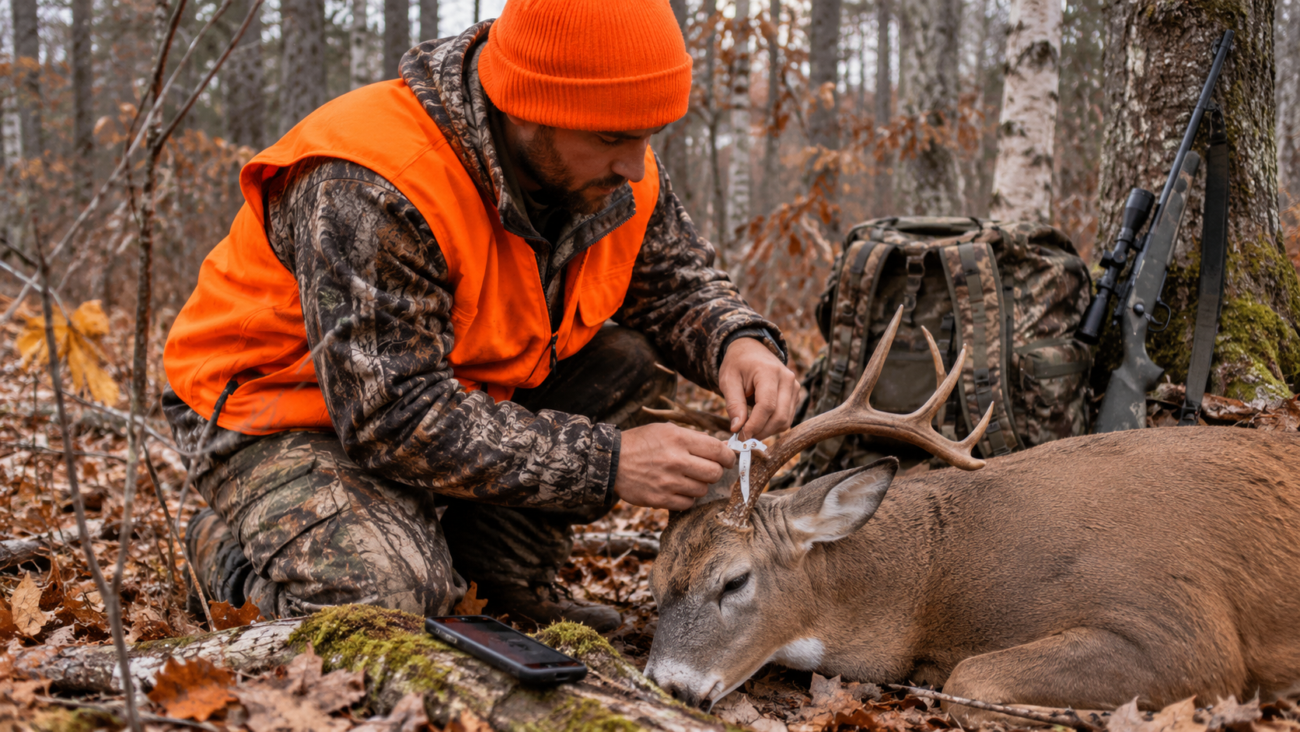
Right after you kill a deer in Ontario, you must notch your tag to show the day, month and time of the kill. This has to happen immediately, at the kill site, and before you move the deer anywhere. Notching invalidates the tag so it cannot be used again.
Here is the order to follow once the deer is down:
- Make sure the deer is dead. Approach carefully from behind and watch for any movement before you put your firearm down.
- Unload your firearm. Make it safe before you handle the deer.
- Notch your tag. Mark the day, the month and the time on the tag, right there at the kill site.
- Check the deer matches your tag. A buck must be tagged with a tag valid for antlered deer, and an antlerless deer with a tag valid for antlerless deer in your WMU.
- Field dress the deer. Then get it out of the bush and cooled down.
Notching rules come from the tags section of the Ontario Hunting Regulations Summary. If you need a refresher on which tag you hold and what it covers, read our Ontario buck tag guide.
Do You Have to Attach the Tag to the Deer?
Not always. In Ontario, you do not have to attach a notched deer tag as long as you are immediately accompanying the deer and can show the tag right away if a conservation officer asks. You must attach the tag as soon as the deer is left without you, such as at camp or at a butcher.
This table shows when the tag can stay in your pocket and when it has to go on the deer:
| Situation | Attach the tag? |
|---|---|
| You are dragging the deer out of the bush | No, you can carry the notched tag in your pocket |
| The deer rides in your truck with you | No, as long as you can show the tag right away |
| The deer rides in a different vehicle from you | Yes |
| The deer hangs at camp while you hunt somewhere else | Yes |
| You drop the deer off at a butcher or processor | Yes |
| You are not sure | Yes, attach it |
When you attach the tag to a deer, put it on the antler or the ear, and keep the head with the deer during transport so its sex and age can be confirmed. The regulations summary says to attach the tag whenever you are unsure, which is the simplest rule to follow.
How Long Does the Tag Have to Stay on the Deer?
An Ontario deer tag has to stay on your person, or attached to the deer when required, until the deer has been transported to the place where it will be processed and is being prepared for long-term storage. In practice, that means the tag stays with the deer until it is being cut, wrapped and frozen.
If you hang a deer in your garage for a few days before butchering, keep the tag with it the whole time. If you drop it at a processor, attach the tag before you leave. A mature deer can be tough to move alone, so plan for help and a way to keep it cool. Our guide on how much a deer weighs can help you plan transport and freezer space.
What Are the Tagging Rules for Party Hunting?
When you party hunt for deer in Ontario, the hunter who kills the deer must immediately tell every other member of the party. If the person who kills the deer is not the tag holder, the tag holder must go to the kill site right away, confirm the type, sex and age of the deer, and then notch their own tag.
A few points to keep the party on the right side of the rules:
- Agree on whose tag will be used before the hunt. That saves confusion when a deer goes down.
- Stay in contact. Radios or phones make the immediate notification easy.
- Only the tag holder notches the tag. Nobody should notch a tag on someone else’s behalf.
- Check WMU rules. Party hunting rules for deer can vary by unit and tag type, so confirm yours in the regulations summary.
What Is Ontario’s Mandatory Hunter Reporting?
Ontario’s mandatory hunter reporting is a short report every deer licence and tag holder must submit after the season. You report whether you hunted, where you hunted and whether you harvested a deer. The report is required even if you did not hunt or did not harvest, and Ontario uses the data to manage deer populations and set future tag numbers.
Key dates and rules from Ontario’s hunter reporting page:
| Rule | Details |
|---|---|
| Who must report | Every deer licence or tag holder, including those who did not hunt or did not harvest |
| 2026 deer report deadline | January 14, 2027 |
| General rule | Reports are due within 14 days after the last hunting season for that species closes |
| Missed report | $25 surcharge on your next licence, tag or draw application for that species |
| Repeated missed reports | $50 surcharge for a consecutive failure to report after July 1, 2026 |
How Do You Submit Your Deer Hunter Report?
You submit your Ontario deer hunter report online through the province’s licensing system, using your Outdoors Card number. It only takes a few minutes. For the 2026 season, Ontario is switching systems, so the timing of your report matters more than usual.
Watch the December system change
The current Fish and Wildlife Licensing Service will be offline from December 7 to 9, 2026. The new system, FishHuntON, launches on December 10, 2026. Ontario recommends finishing any transactions, including hunter reports for hunts that are already complete, by December 6.
Steps to report
- Have your Outdoors Card number and your licence details ready.
- Note the WMU or WMUs you hunted and the number of days you hunted.
- If you harvested a deer, note the date, the WMU and whether it was antlered or antlerless.
- Go to ontario.ca/page/hunter-reporting and follow the link to the licensing system.
- Complete the deer report and save or screenshot your confirmation.
If you are still hunting a later season, such as the muzzleloader season from November 30 to December 6, you can report through FishHuntON after December 10. Just make sure it is done before January 14, 2027.
What Happens If You Do Not Tag or Report Correctly?
Failing to notch or attach your tag correctly can lead to charges under Ontario’s Fish and Wildlife Conservation Act, and the deer can be seized. Failing to submit your hunter report on time adds a $25 surcharge the next time you buy a licence or tag or apply for a draw for that species, rising to $50 for repeated failures.
Most tagging mistakes happen in the excitement of the moment, so make notching your tag a habit before you even take a photo. For more on what is at stake, read our guide to Ontario hunting fines and penalties.
Frequently Asked Questions
When do I have to notch my deer tag in Ontario?
You must notch your deer tag immediately after the kill, at the kill site, before you move the deer. Mark the day, the month and the time of the kill. Notching invalidates the tag so it cannot be used again. If someone else in your party shot the deer, go to the kill site and confirm the deer before notching your tag.
Can I keep my deer tag in my pocket?
Yes, as long as you are immediately accompanying the deer and can show the tag right away if asked. Many hunters keep the notched tag in a pocket while dragging the deer out. Attach the tag once the deer is left without you, for example at camp, in another vehicle or at a processor.
Where do I put the tag on a deer?
Attach the tag to the deer’s antler or ear, and keep the head with the deer while it is being transported. That lets a conservation officer confirm the sex and age of the deer against your tag. Keep the tag with the deer until it is being processed for long-term storage.
Do I have to report if I did not get a deer?
Yes. Ontario requires every deer licence and tag holder to submit a hunter report, even if you did not harvest a deer or did not go hunting at all. The 2026 deer report is due January 14, 2027. A missed report adds a $25 surcharge to your next purchase for that species.
When is the 2026 deer hunter report due in Ontario?
The 2026 deer hunter report is due on January 14, 2027. Ontario’s licensing system will be offline from December 7 to 9, 2026, while it switches to FishHuntON, so if your hunting is done, report by December 6. Otherwise, report through FishHuntON after December 10.
What is FishHuntON?
FishHuntON is Ontario’s new fishing and hunting licensing system, launching on December 10, 2026. It replaces the current Fish and Wildlife Licensing Service, which goes offline from December 7 to 9. You will use FishHuntON for hunter reports, licences and tags after that date.
Get Ready for the Rest of the Season
Victory Ridge Sports is a Canadian hunting and target sports store at 431 Bayview Drive, Unit #3, in Barrie, Ontario. Before your next sit, stock up on blaze orange, a sharp knife for field dressing and the rest of your kit. Visit the showroom, call us at 1-705-252-4400, or shop online.
This article is a summary for planning purposes only. Always check the current Ontario Hunting Regulations Summary and the mandatory hunter reporting rules before you hunt.