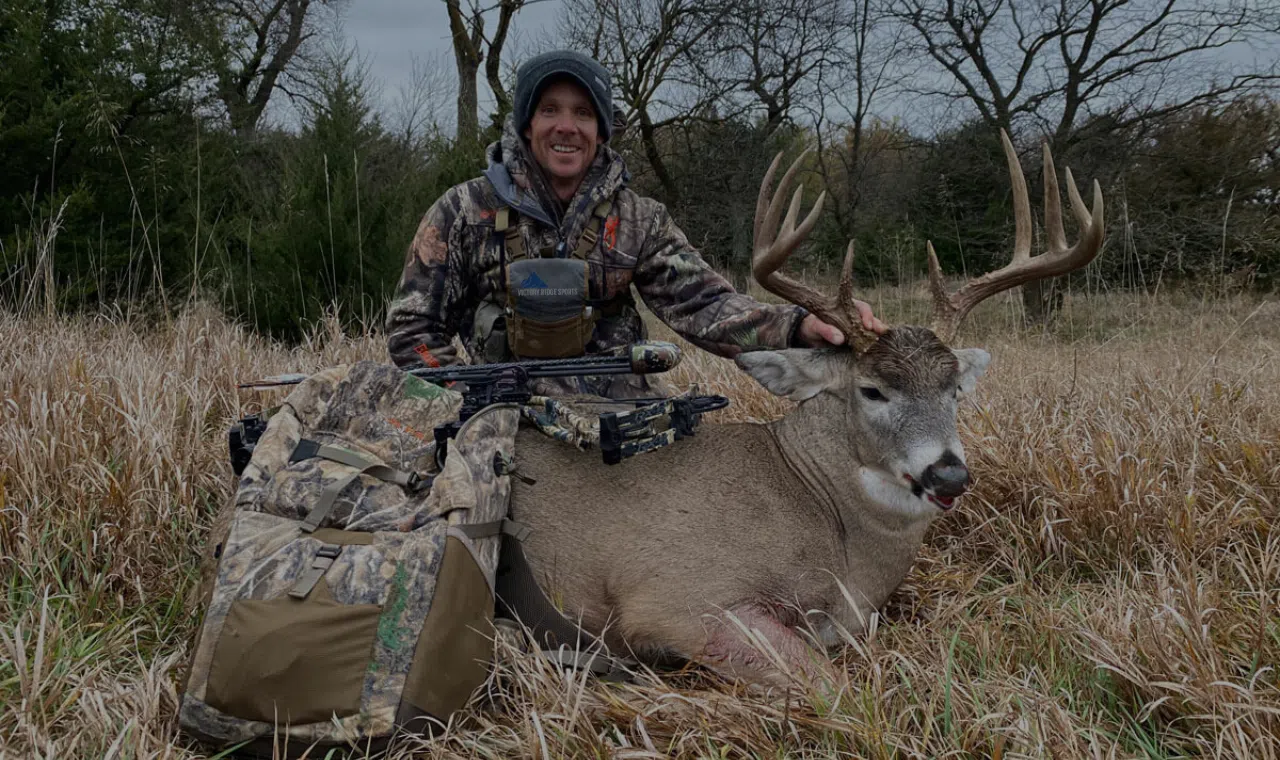
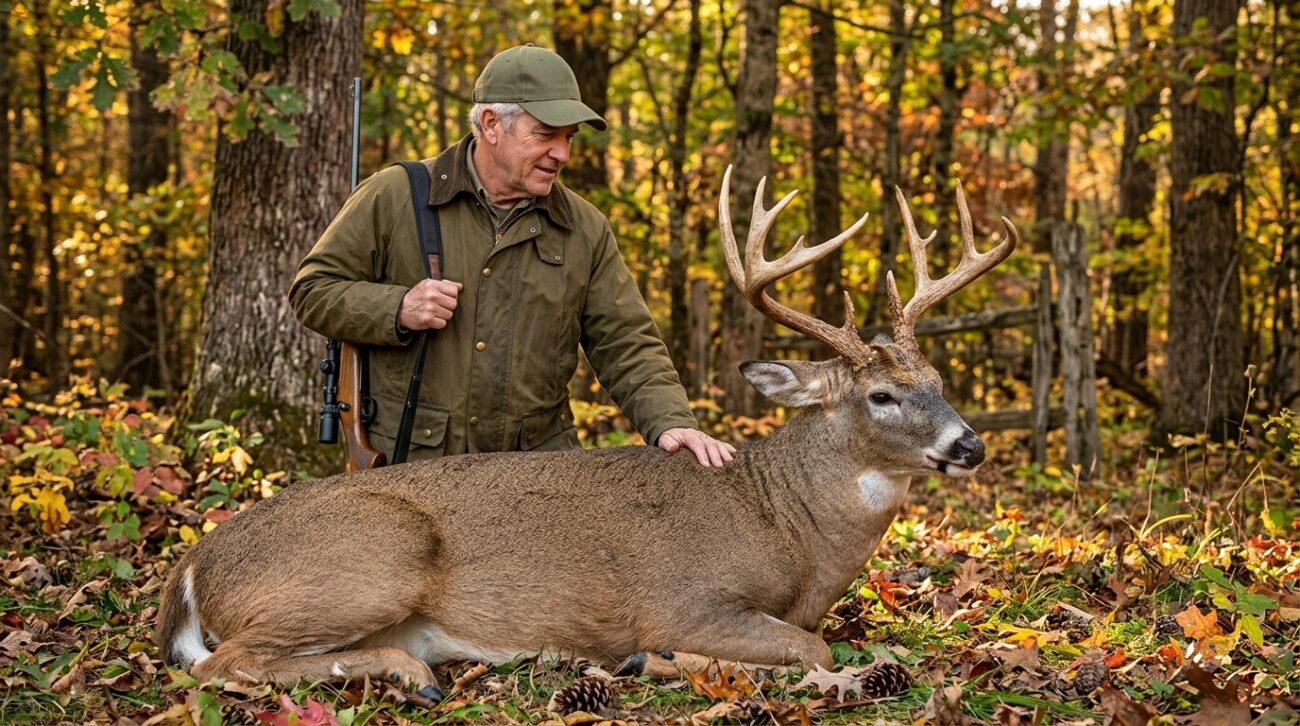
Every deer camp I have ever hunted argues about weight, and almost nobody in the argument is talking about the same number.
My uncle swears he shot a 250-pound buck in 1998. My cousin, who helped drag it, says it was 190. Both of them are right. My uncle means live weight, guessed from the drag and the size of the body. My cousin means what the scale at the butcher read after the animal was gutted. That gap, about sixty pounds on a good deer, causes more deer camp disagreements than any other topic, and it also causes hunters to feel cheated when the freezer comes back lighter than expected.
Direct answer: A mature Canadian whitetail buck typically weighs 150 to 250 pounds live and 115 to 195 pounds field dressed. A mature doe runs roughly 105 to 120 pounds field dressed. Expect boneless meat to come back at about 48 percent of the field-dressed weight.
The Three Weights Hunters Talk About
Most weight confusion disappears once you separate the three numbers. They describe the same animal at three different stages, and they differ by a lot.
Here’s what each one means:
Live weight, or on the hoof
Live weight measures the whole animal before anything comes out of it. Hunters almost never weigh this directly, because few of us own a scale that handles a whole deer in the bush. Nearly every live weight you hear quoted is an estimate calculated backward from the field-dressed number.
Field-dressed weight
Field-dressed weight, sometimes called hog-dressed, measures the animal after you remove the internal organs and nothing else. Hide, head, and legs stay on. The viscera account for roughly 22 percent of a deer’s body mass, so field dressing removes about a fifth of the weight immediately. This is the number most butchers and most camp scales actually record.
Boneless meat weight
The last number is what ends up in your freezer after the hide, bones, and connective tissue come off. It lands far below what most hunters expect, and it explains most of the accusations processors quietly absorb every November.
Average Buck and Doe Weights in Canada
Canadian deer sit at the heavy end of the continental range, so US averages understate what you will drag. These figures reflect northern whitetails specifically.
Here’s what to expect by age and sex:
| Deer | Field-dressed | Estimated live |
| Fawn (button buck) | 55 to 75 lb | 70 to 96 lb |
| Doe fawn | 45 to 65 lb | 58 to 83 lb |
| Yearling buck | 105 to 125 lb | 134 to 160 lb |
| Mature doe | 105 to 120 lb | 134 to 154 lb |
| Mature buck | 115 to 195 lb | 150 to 250 lb |
| Exceptional northern buck | 230 lb and up | 290 lb and up |
Mature bucks
A mature northern buck commonly field dresses between 150 and 195 pounds, putting live weight around 190 to 250 pounds. Bucks reach their peak body weight between five and a half and six and a half years old, which is older than most hunters realize and older than most bucks survive in heavily hunted units.
Does and younger deer
Mature does top out earlier, peaking around four and a half years, and a healthy northern doe typically field dresses 105 to 120 pounds. Yearling bucks overlap heavily with mature does on the scale, which is why a basket-racked deer and a big doe often weigh nearly the same.
Why Canadian Deer Run Heavier
The gap between a Saskatchewan buck and a Gulf Coast buck is not a small one, and it comes down to biology rather than luck.
Here’s what drives the difference:
Bergmann’s rule
Within a species, animals in colder climates grow larger bodies, because a larger body holds heat more efficiently relative to its surface area. Whitetails follow this pattern cleanly across North America, which is why the heaviest deer on the continent come from Canada and the northern US states, and why Florida Key deer average well under 75 pounds.
Farmland and fat
Agriculture stacks on top of the climate effect. Deer with access to corn, soybeans, and grain build muscle and lay down fat ahead of winter, and prairie farmland in Saskatchewan and Alberta combines that food with hard winters. Those two forces together produce the heaviest wild whitetails anywhere.
Age structure matters more than genetics
A buck cannot reach 250 pounds without living six years first. Units with lighter pressure and more mature bucks produce heavier deer than units where most bucks die at a year and a half, regardless of the food available.
Estimating Live Weight and Meat Yield
Two simple calculations cover almost everything a hunter needs, and both work from the field-dressed weight.
Here’s how to run each one:
Converting field-dressed to live weight
Multiply the field-dressed weight by 1.28. A buck that field dresses at 150 pounds had a live weight around 192 pounds. A 195-pound field-dressed buck was carrying about 250 pounds. Biologists will quibble with a single ratio applied across every deer, and it holds up fine for camp arithmetic.
What you actually get back
An Ohio Division of Wildlife study weighing 115 harvested deer found the average animal field dressed at 107.56 pounds and yielded 52.19 pounds of venison, a rate of 48.52 percent. Apply that to a 150-pound field-dressed buck and you get roughly 73 pounds of boneless meat. Bucks and does of similar age yield similar percentages.
What reduces your yield
Shot placement does more damage to yield than anything else under your control, since a heavy shoulder hit destroys the front quarters outright. Our guide to where to shoot a buck and place the shot cleanly covers the placement that protects meat. Warm weather, a slow recovery, and rushed field care all cost you further.
The Heaviest Deer on Record
The record books make the Canadian case better than any average does, though the top entry carries an honest asterisk.
Here’s what the record actually shows:
The Ontario buck
The heaviest whitetail generally credited in North America fell to Ontario bowhunter John Annett in 1977. The deer field dressed at 431 pounds on government-certified scales, which puts estimated live weight above 540 pounds. Reports indicate the animal went to the butcher before Canadian authorities could inspect it, so many sources treat it as unverified rather than official.
The verified heavyweights
Two Minnesota bucks share the verified world record, both field dressing at 402 pounds with an estimated live weight of 511 pounds, taken in 1926 and 1981. Canadian provinces fill much of the rest of the list, including a Saskatchewan buck at 407 pounds live and two Alberta bucks at 400 pounds live.
Getting the Most From Your Deer
Weight is the fun part of the conversation. Yield is the useful part, and the difference between a good freezer year and a disappointing one usually comes down to the hour after the shot rather than the size of the animal.
We run a Canadian hunting and target sports store in Barrie, Ontario, at 431 Bayview Drive. We stock rifles, shotguns, and archery gear, plus the field care equipment that protects your yield, including quality knives, sharpeners, bone saws, game bags, and packs built to carry quarters out rather than drag a whole deer.
Most of the people behind our counter have processed their own deer for years, so we can talk through field care and gear before you need it. If you are still sorting out licensing, our guide to Ontario deer tags and what they cover walks through it. Visit the Barrie showroom Monday through Saturday, call 1-705-252-4400, or order online with free shipping over $250.
Frequently Asked Questions
How much does an average buck weigh?
A mature whitetail buck in Canada typically weighs 150 to 250 pounds live, which works out to roughly 115 to 195 pounds field dressed. Yearling bucks run considerably lighter, usually 105 to 125 pounds field dressed.
How do you calculate live weight from field-dressed weight?
Multiply the field-dressed weight by 1.28. Field dressing removes roughly 22 percent of a deer’s body mass, so a 125-pound field-dressed deer had a live weight around 160 pounds.
How much meat do you get from a deer?
Expect about 48 percent of the field-dressed weight as boneless venison. A 150-pound field-dressed deer yields roughly 73 pounds, and a 110-pound doe yields around 53 pounds. Shot damage and poor field care lower that figure.
What is the heaviest whitetail deer ever shot?
An Ontario buck taken in 1977 field dressed at 431 pounds with an estimated live weight over 540 pounds, though it went unverified. Two Minnesota bucks share the verified record at 402 pounds field dressed.