
You’ve picked your rifle. You’ve got your PAL. Now you’re staring at a wall of scopes and wondering whether a $200 optic can actually get the job done on a whitetail at 150 yards. The Vortex Crossfire 2 keeps showing up in every “best budget scope” list on the internet, but most of those reviews are written by affiliates who make money when you click “buy now.” This isn’t one of those reviews.
This is an honest breakdown of what the Vortex Crossfire 2 does well, where it falls short, and whether it’s genuinely good enough to put on your deer rifle this season. We sell this scope at Victory Ridge Sports, and we’d rather you buy the right optic for your situation than return the wrong one in November.
The Short Answer: Yes, With Conditions
If you’re hunting deer in typical Canadian bush, hardwood, or mixed terrain and your shots are under 300 yards, the Vortex Crossfire 2 is more than good enough. It will hold zero, deliver a clear sight picture in normal daylight through dusk, survive rain and freezing temperatures, and help you make clean, ethical kills on whitetail, mule deer, and black bear at the distances most Canadian hunters actually shoot.
Where it starts to struggle is in extreme low-light conditions deep in timber at last legal light, at extended ranges beyond 350 yards where fixed parallax becomes a factor, and in situations where you need crisp turret feedback for repeated adjustments. Those are real limitations, and we’ll cover each one honestly. But for the vast majority of Canadian deer hunters, the Crossfire 2 does exactly what it needs to do without asking you to spend $600 or more on glass.
What You Actually Get with the Vortex Crossfire 2
The Crossfire 2 sits at the entry level of the Vortex lineup, but “entry level” from Vortex is not the same as a no-name scope from an online clearance bin. Here’s what the platform delivers and why each feature matters when you’re behind it on a cold November morning.
Fully Multi-Coated Lenses and What That Means for Light Transmission
Every air-to-glass surface in the Crossfire 2 is coated with multiple anti-reflective layers. In practical terms, this means more light reaches your eye and less is lost to glare and reflection inside the tube. You won’t mistake it for a $1,500 Leupold in a side-by-side glass test, but the image is noticeably brighter and sharper than uncoated or single-coated budget scopes. For a deer hunter shooting from dawn through dusk, this coating is the single most important feature separating the Crossfire 2 from the cheap scopes that look similar on paper.
Aircraft-Grade Aluminum Tube, Nitrogen Purged and O-Ring Sealed
The single-piece tube is machined from aircraft-grade aluminum and sealed with O-rings at every junction. Nitrogen purging eliminates internal moisture, which means the scope won’t fog up when you walk from a warm truck into freezing air or when temperatures swing 20 degrees between morning and afternoon. For Canadian hunters who deal with rain, snow, sleet, and temperature swings as a matter of routine, this level of weather sealing is non-negotiable. The Crossfire 2 delivers it at a price point where most competitors cut corners.
Long Eye Relief and Fast-Focus Eyepiece
Eye relief across the Crossfire 2 lineup ranges from 3.4 to 4.0 inches depending on the model. That’s generous enough to keep your eyebrow safe from scope bite on magnum calibers like .300 Win Mag and comfortable enough for fast target acquisition when a deer steps out at 80 yards and you have three seconds to shoot. The fast-focus eyepiece on the rear lets you sharpen the reticle to your eye quickly, which matters more than most new hunters realize.
Reticle Options: V-Plex, BDC, Dead-Hold BDC, and V-Brite
Vortex offers the Crossfire 2 with several reticle options. The V-Plex is a clean, traditional duplex crosshair that works perfectly for hunters who zero at 100 yards and hold over by feel. The BDC and Dead-Hold BDC reticles add hashmarks below the crosshair for holdover at extended distances, useful if you’re shooting open country on the prairies. The V-Brite adds an illuminated centre dot for low-light situations. For pure deer hunting in Canadian bush, the V-Plex is the simplest and most effective choice. If you hunt open terrain or want a low-light advantage, the BDC or V-Brite variants are worth the small price bump.
Where the Crossfire 2 Performs Well for Deer Hunting
It’s easy to overthink optics. The reality is that most deer in Canada are killed at distances between 50 and 200 yards, in moderate lighting, by hunters using mid-range equipment. The Crossfire 2 thrives in exactly these conditions.
Shots Under 300 Yards in Typical Canadian Bush and Hardwood
At 100 to 200 yards, the Crossfire 2 delivers a bright, sharp image with enough clarity to identify your target, confirm what’s behind it, and place your crosshair precisely on the vitals. The centre of the glass is crisp and clean at every magnification setting. For the typical Ontario hardwood stand, Alberta parkland, or British Columbia interior hunt, this scope handles the distances you’ll actually encounter without any hesitation.
Daylight to Dusk Performance
The fully multi-coated lenses gather enough light to keep the image usable from first legal light through the final 30 minutes of shooting time. You won’t be identifying targets 30 minutes after sunset like you might with a $1,200 Zeiss, but you’ll have a clear picture during every minute of legal shooting light. For the 3-9×50 model specifically, the larger 50mm objective lens pulls in additional light that makes a noticeable difference during those critical dawn and dusk windows when deer are most active.
Durability in Rain, Snow, and Cold
The nitrogen purging and O-ring sealing aren’t marketing gimmicks on the Crossfire 2. They work. Hunters across Canadian forums consistently report zero fogging issues even after dramatic temperature swings, and the scope holds zero reliably through recoil, rough transport, and season after season of use. This is a scope you can throw in a soft case, bounce down a logging road, and trust when the moment comes.
The Vortex VIP Warranty
This is arguably the Crossfire 2’s single biggest advantage over every other scope in its price range. The Vortex VIP Warranty is unlimited, unconditional, and fully transferable with no receipt required. If you break it, drop it, or it fails for any reason, Vortex repairs or replaces it. No questions asked. No other budget scope manufacturer offers anything close to this level of coverage, and it effectively eliminates the risk of buying an entry-level optic.
Where the Crossfire 2 Falls Short (Honest Limitations)
No $200 scope is perfect. If someone tells you a budget optic has zero compromises, they’re either selling it or haven’t used anything better.
Here’s where the Crossfire 2 shows its price point:
Fixed Parallax on Most Models
Most Crossfire 2 models have parallax fixed at 100 yards. This means the scope is optimized for shots right around that distance. At 50 yards or beyond 250 yards, you may notice slight parallax shift, which is a small movement of the reticle against the target when you shift your eye position behind the scope. For hunting shots where you’re holding centre-mass on a deer, this is rarely an issue. For precision target work or shots beyond 300 yards, it becomes a real limitation. The 6-24×50 AO model offers adjustable parallax if this matters to you.
Edge Clarity Softens at Higher Magnification
The centre of the image is sharp and clean across the magnification range. The edges, however, soften noticeably at the top end, particularly on the 4-12×44 and higher-magnification models. At 9x and above, you’ll notice the outer 15 to 20 percent of the image losing crispness. This rarely affects shot placement since your crosshair sits at the centre, but it’s a visible difference compared to mid-range scopes like the Vortex Diamondback or Leupold VX-Freedom.
Non-Illuminated Reticles Disappear in Deep Timber at Last Light
If you hunt thick cedar swamps or deep conifer stands where light fades fast, the standard V-Plex and BDC reticles can become difficult to see against a dark background in the final minutes of legal shooting time. The thin black crosshairs simply don’t contrast well against dark timber. The V-Brite illuminated reticle model solves this problem, but it’s only available in certain configurations. If low-light performance in heavy cover is important to your hunting, factor the V-Brite into your decision or consider stepping up to the Diamondback.
Turret Feel Is Functional but Not Precise
The capped turrets on the Crossfire 2 click in quarter-MOA increments as advertised, and they hold zero reliably. But the tactile feel of each click is soft and slightly mushy compared to mid-range and premium scopes. For a deer hunter who zeros once and leaves the turrets alone all season, this is irrelevant. For a shooter who adjusts turrets frequently at the range or dials for distance, the lack of crisp feedback can be frustrating. This is a scope designed to be set and forgotten, and it excels in that role.
Which Crossfire 2 Model Is Best for Deer Hunting in Canada?
Vortex makes the Crossfire 2 in over a dozen configurations. Not all of them make sense for deer hunting. Here’s a direct recommendation based on where and how you hunt.
| Model | Magnification | Objective | Best For | Approx. Price (CAD) |
| 3-9×40 | 3-9x | 40mm | All-around Canadian deer hunting | ~$220 |
| 3-9×50 | 3-9x | 50mm | Dawn/dusk hunters, bigger light gathering | ~$300 |
| 4-12×44 | 4-12x | 44mm | Open prairie, longer shots to 350 yds | ~$280 |
| 2-7×32 | 2-7x | 32mm | Bush hunting, lever actions, light carry | ~$200 |
3-9×40: The All-Around Canadian Deer Scope
This is the model most deer hunters should buy. The 3-9x magnification range covers everything from a 50-yard brush shot at 3x to a 250-yard field edge opportunity at 9x. The 40mm objective keeps the scope compact and light without sacrificing meaningful light transmission. It mounts low on any standard rifle without needing oversized rings. If you own one deer rifle and hunt one type of terrain, this is the Crossfire 2 to get.
3-9×50: Extra Light for Dawn and Dusk Hunters
The larger 50mm objective lens gathers more light than the 40mm model, which translates to a noticeably brighter image in the first and last 20 minutes of legal shooting time. The tradeoff is a taller scope that requires higher rings to clear the barrel and a slightly heavier package. If you hunt mornings and evenings religiously and want every possible minute of usable light, the 50mm is worth the size increase.
4-12×44: Open Country and Prairie Hunting
For Alberta and Saskatchewan hunters taking shots across open grain fields or CRP land where 250 to 350 yard opportunities are common, the extra top-end magnification helps with target identification and precise shot placement at distance. The 44mm objective balances light gathering with a reasonable profile. This model also works well for varmint and predator hunters who want one scope that doubles between coyotes and deer.
2-7×32: Lightweight Bush Gun Companion
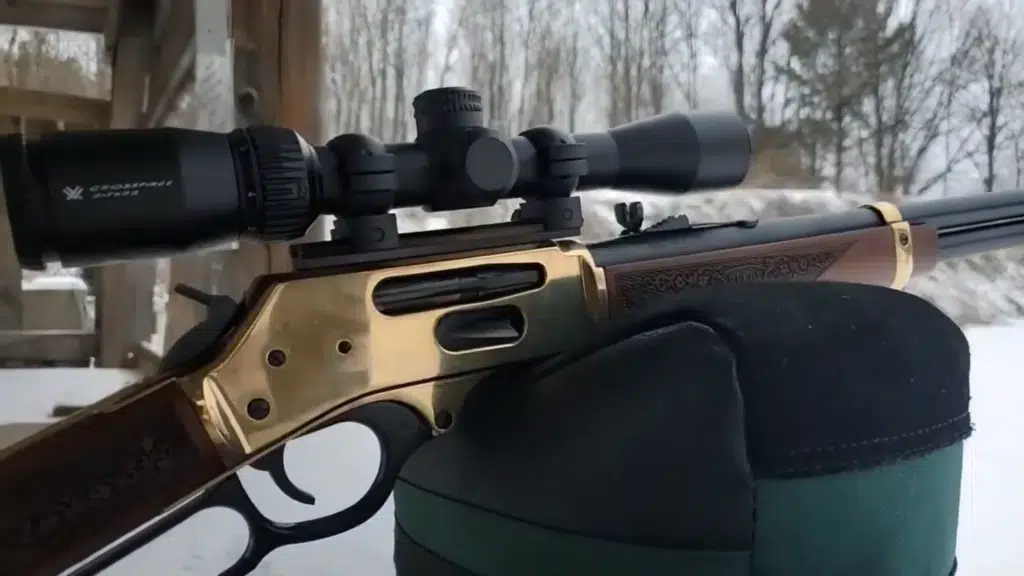
Compact, light, and fast to acquire targets at low magnification. This model pairs perfectly with lever actions like the Henry .30-30 or Marlin 336 and with short-barreled bolt actions used in thick Ontario or New Brunswick bush. The low 2x bottom end gives you a wide field of view for close, fast shots, which is exactly what tight timber demands.
Vortex Crossfire 2 vs Diamondback vs Crossfire HD: When to Upgrade
The Crossfire 2 isn’t the only option in the Vortex lineup, and understanding when to spend more helps you avoid both overspending and underspending.
Crossfire 2 vs Diamondback: Is the Extra $100 to $150 Worth It?
The Diamondback delivers noticeably better edge-to-edge clarity, crisper turret clicks, and improved low-light performance thanks to upgraded glass coatings. If you hunt exclusively in thick timber during low-light hours or you want a scope that doubles as a range optic with frequent turret adjustments, the Diamondback justifies the premium. If you hunt open terrain in normal daylight and zero your scope once per season, the Crossfire 2 gives you 85 percent of the Diamondback’s performance at 60 percent of the cost.
Crossfire 2 vs New Crossfire HD: What Actually Changed?
Vortex released the Crossfire HD line in 2025 as a direct update to the Crossfire 2. The HD models add improved turret feel, threaded sunshades on all models, and refined optical coatings. Several configurations also feature new reticle options including illuminated variants. If you’re buying new today and the Crossfire HD is available in your preferred configuration, it’s the better buy. If you find a Crossfire 2 on sale or already own one, there’s no reason to rush the upgrade for deer hunting.
When You Should Skip the Crossfire 2 Entirely
If you’re building a long-range precision rig for shots beyond 500 yards, the Crossfire 2 is not the right scope. If you hunt almost exclusively in extreme low-light conditions, a premium optic with high-end glass will give you meaningfully more shooting time. And if you’re mounting glass on a rifle that costs $2,000 or more, pairing it with a $200 scope creates a bottleneck that limits what the rifle can do. In those cases, look at the Vortex Viper PST Gen II, Leupold VX-5HD, or similar mid-range optics.
Best Rifle Pairings for the Vortex Crossfire 2 in Canada
A scope is only half the equation. Here are three proven rifle and Crossfire 2 combinations that make sense for Canadian deer hunters at different budgets.
Budget Deer Setup Under $800 CAD
Pair a Ruger American or Savage Axis II with the Crossfire 2 3-9×40. Total cost lands around $650 to $800 depending on the rifle configuration. This is the most popular entry-level deer hunting setup in Canada for a reason. Both rifles shoot sub-MOA groups with quality ammunition, and the Crossfire 2 doesn’t hold them back at typical hunting distances. Add a box of quality hunting ammunition and you’re ready for opening day.
Mid-Range Setup Under $1,500 CAD
A Tikka T3x Lite or CZ 600 Alpha paired with the Crossfire 2 4-12×44 gives you a rifle that will last decades with an optic that handles everything from bush to open country. Many hunters start with this combination and don’t upgrade the scope until they’ve put several seasons through it. At that point, you move the Crossfire 2 to a rimfire trainer or a backup rifle and step up to a Diamondback or Viper for the primary gun.
Classic Brush Gun Combo
A lever action in .30-30 or .35 Remington with the Crossfire 2 2-7×32 creates the quintessential Canadian bush gun. Low magnification, fast acquisition, light weight, and enough scope to reach 150 yards with confidence. This combination is as practical today as it was 30 years ago, and the Crossfire 2 keeps the total investment reasonable.
How to Mount and Zero Your Crossfire 2 for Deer Season
Buying the right scope is only step one. Mounting it correctly and confirming zero before season is what actually puts venison in the freezer.
Choosing the Right Rings
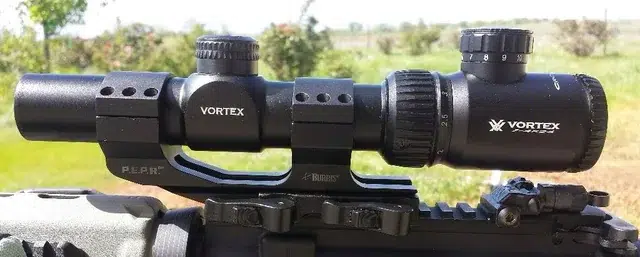
Most Crossfire 2 models use a 1-inch tube. Make sure your rings match. The 6-24×50 AO and the 1-4×24 LPVO use 30mm tubes, so double check your model before ordering. Medium-height rings work for the 40mm and 44mm objective models on most bolt actions. The 50mm objective typically requires high rings to clear the barrel. Spend $30 to $50 on quality rings from Vortex, Leupold, or Burris. Cheap rings are the fastest way to introduce zero-shift problems that have nothing to do with the scope itself.
Bore Sighting and Zeroing at 100 Yards
Start by bore sighting either visually (removing the bolt and looking through the barrel) or with a laser bore sighter. This gets you on paper at 25 yards. Move to 50 yards, fire a three-round group, and adjust. Then move to 100 yards and fire another three-round group to confirm your final zero. Most deer hunters in Canada should zero at 100 yards. This keeps you within 2 to 3 inches of point of aim from 25 to 200 yards on typical deer cartridges like .308 Win, .30-06, and 6.5 Creedmoor.
Confirming Zero Before Season
Don’t assume last year’s zero survived the off-season. Before opening day, fire at least three to five rounds at 100 yards to confirm the scope hasn’t shifted. If you’ve removed and reinstalled the scope, changed rings, or dropped the rifle, re-zero completely. A quality shooting practice session two weeks before season is the cheapest insurance you can buy against a missed opportunity on a buck.
The Verdict: Who Should Buy the Vortex Crossfire 2 for Deer Hunting
You hunt deer in Canada at distances under 300 yards. You want a reliable, weather-sealed scope that holds zero and delivers a clear image during legal shooting hours. You’re building your first deer rifle setup or equipping a second rifle without breaking the bank. You value the peace of mind that comes with Vortex’s unconditional lifetime warranty. You zero your scope once and leave the turrets alone all season. If any of that describes you, the Vortex Crossfire 2 is genuinely good enough, and you should feel confident putting it on your bolt action hunting rifle this fall.
You hunt exclusively in extreme low-light timber and need every last minute of visibility. You’re shooting beyond 350 yards regularly and need adjustable parallax and crisp turret feedback. You’ve invested in a premium rifle platform and want glass that matches its capability. You compete in precision rifle or long-range shooting events. In those cases, step up to the Vortex Diamondback, Leupold VX-Freedom, or Vortex Viper PST Gen II depending on your budget and application.