

Did you know that Canada is home to a fascinating variety of deer species, each uniquely adapted to thrive in its diverse landscapes?
In this essential guide, we explore the types of deer species in Canada, uncovering their characteristics, behaviors, and conservation efforts. From the iconic White-tailed Deer to the elusive Caribou, you’ll gain insight into what makes each species remarkable and the crucial role they play in the ecosystem.
Whether you’re a wildlife enthusiast or simply curious about Canadian fauna, this article will give you a comprehensive overview of the deer species that roam the country’s forests, prairies, and tundra.
Deer Types In Canada
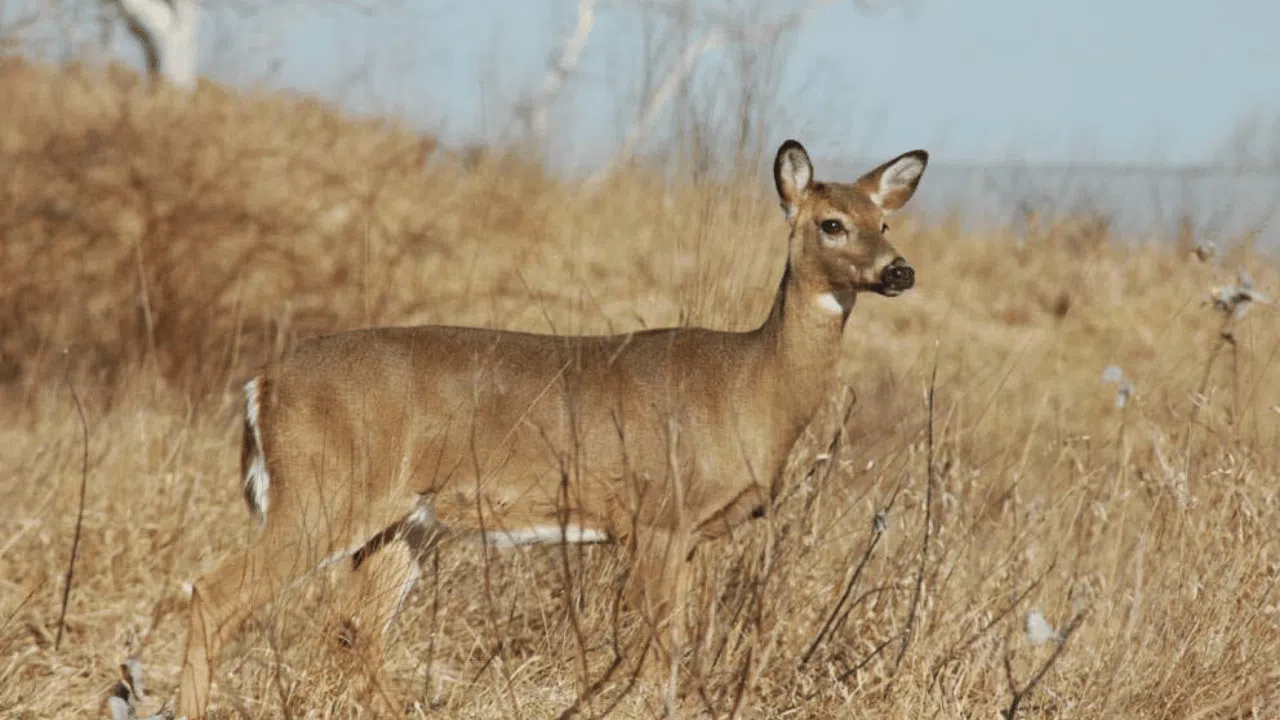
White-tailed Deer (Odocoileus virginianus)
Characteristics
- Medium-sized deer with the distinctive white underside of their tail, which is raised when alarmed.
- Coat color changes with the seasons, appearing reddish-brown in summer and grayish in winter.
- Males weigh between 150 to 300 pounds, while females are slightly smaller.
Habitat
- Found across southern Canada, from the Maritimes to British Columbia.
- Prefers mixed forests, agricultural areas, and suburban environments due to their adaptability.
Behavior
- Crepuscular, meaning they are most active during dawn and dusk.
- Males grow antlers each spring and shed them after the mating season.
- Generally solitary, though they may gather in small groups during winter.
Conservation Status
- Least Concern according to the IUCN Red List.
- Populations are stable, but specific subspecies, like the Columbian White-tailed Deer, are listed as Endangered under Canada’s Species at Risk Act (SARA).
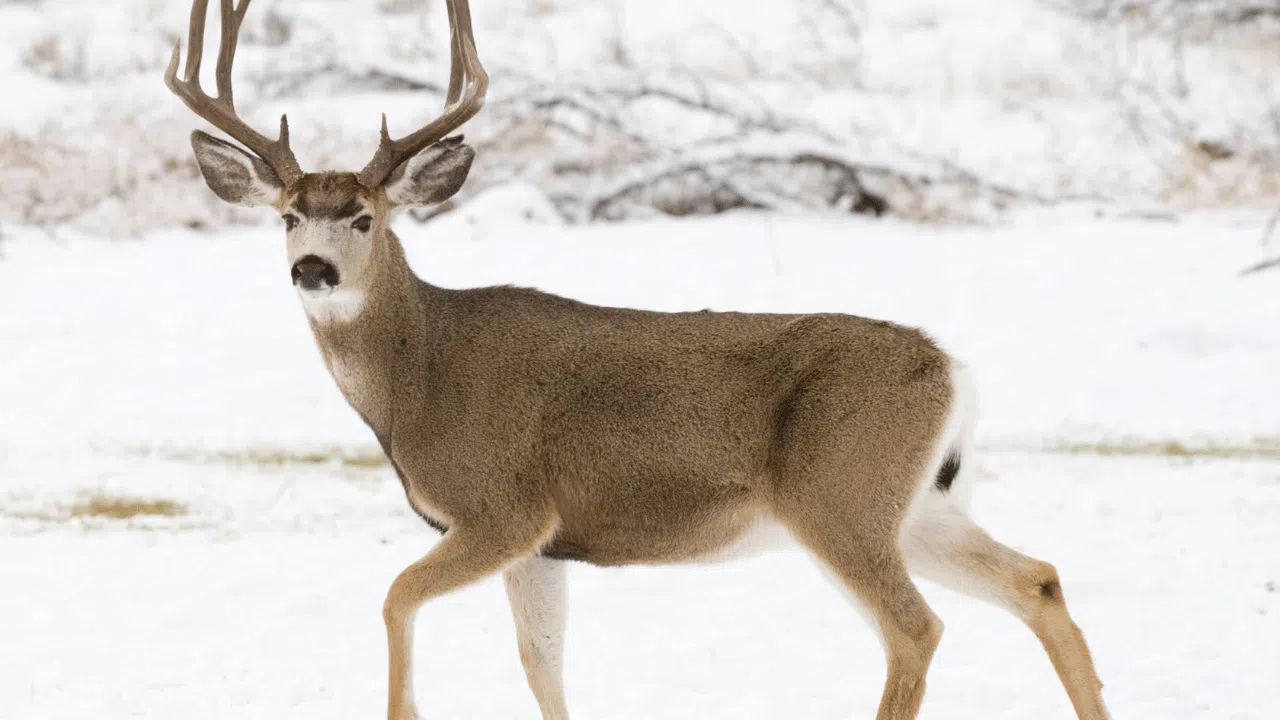
Mule Deer (Odocoileus hemionus)
Characteristics
- Recognizable by their large ears, which resemble those of a mule, and a black-tipped tail.
- Antlers are forked, branching into a Y-shape, making them distinct from White-tailed Deer.
Habitat
- Primarily found in western Canada, particularly in British Columbia, Alberta, and Saskatchewan.
- Prefers open and rugged terrain such as prairies, foothills, and mountain slopes.
Behavior
- Known for their unique “stotting” behavior, where all four feet leave the ground simultaneously.
- Active during early morning and late evening hours.
Conservation Status
- Least Concern on the IUCN Red List, with populations managed through provincial regulations.
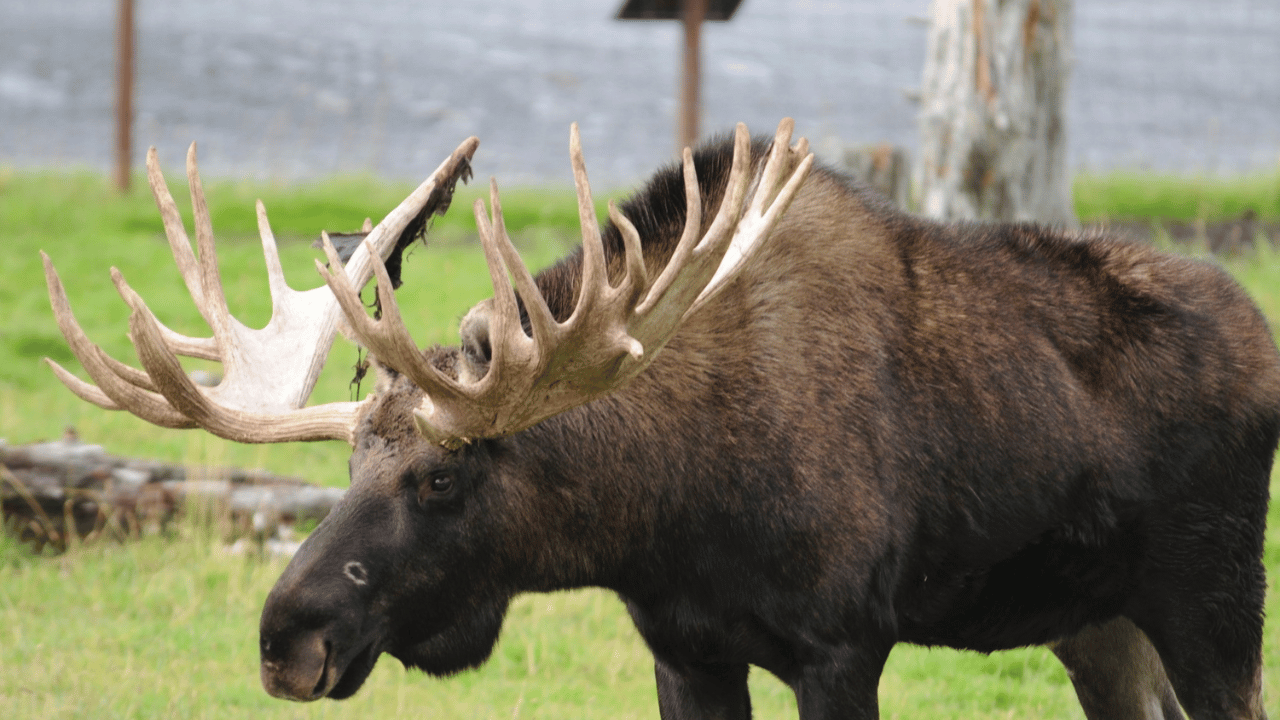
Moose (Alces alces)
Characteristics
- The largest member of the deer family, standing up to 6 feet at the shoulder and weighing up to 1,500 pounds.
- Males have broad, palmate antlers, unlike the branching antlers of other deer species.
Habitat
- Found throughout Canada, especially in Newfoundland, Ontario, Quebec, and the western provinces.
- Prefers boreal forests and areas near lakes, rivers, and wetlands.
Behavior
- Solitary animals, except during mating season or when females are with calves.
- Known for their swimming abilities, often seen foraging for aquatic plants.
Conservation Status
- Least Concern globally, but some regional populations are under threat, such as the mainland moose in Nova Scotia, which is listed as Endangered.
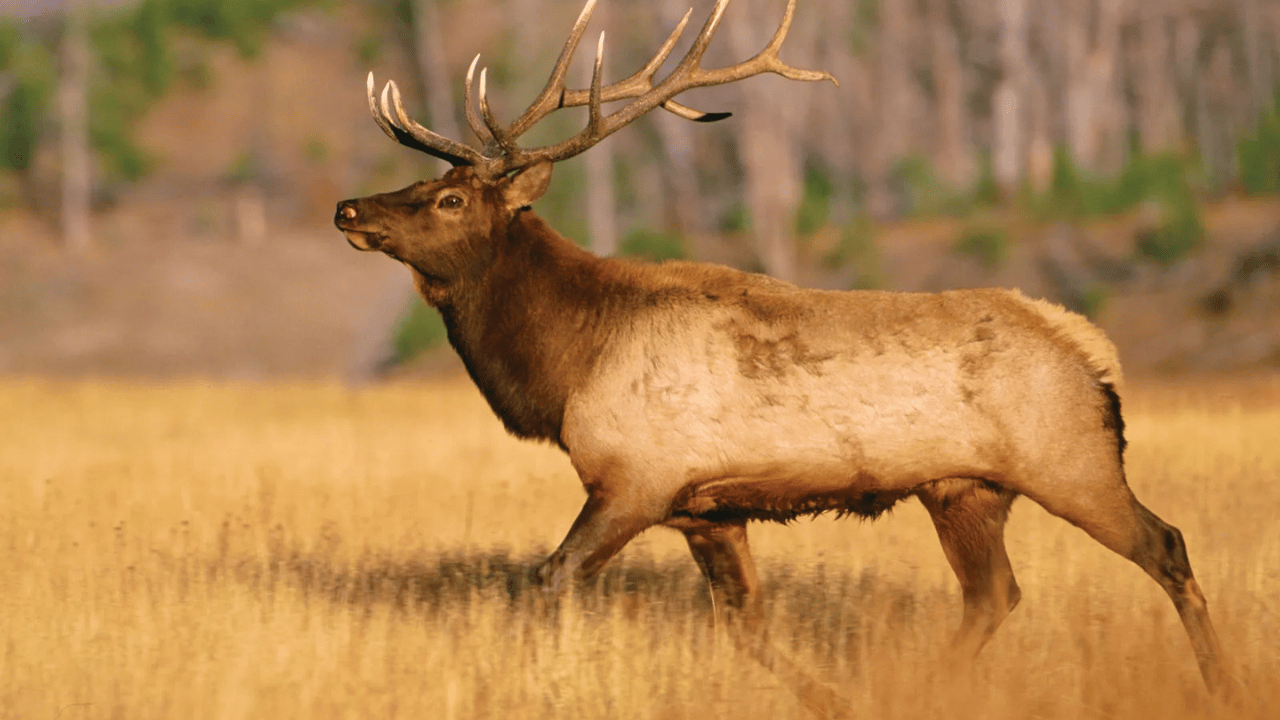
Elk (Cervus canadensis)
Characteristics
- Large size with a reddish-brown coat, a lighter rump, and dark mane.
- Males grow impressive antlers that can reach up to 4 feet in length.
Habitat
- Common in western Canada, particularly in Alberta and British Columbia.
- Prefers open meadows, forest edges, and grasslands.
Behavior
- Social animals that form large herds, particularly in winter.
- Known for their loud bugling calls during the mating season in the fall.
Conservation Status
- Least Concern on the IUCN Red List, with conservation efforts focusing on maintaining population stability.
Caribou (Rangifer tarandus)
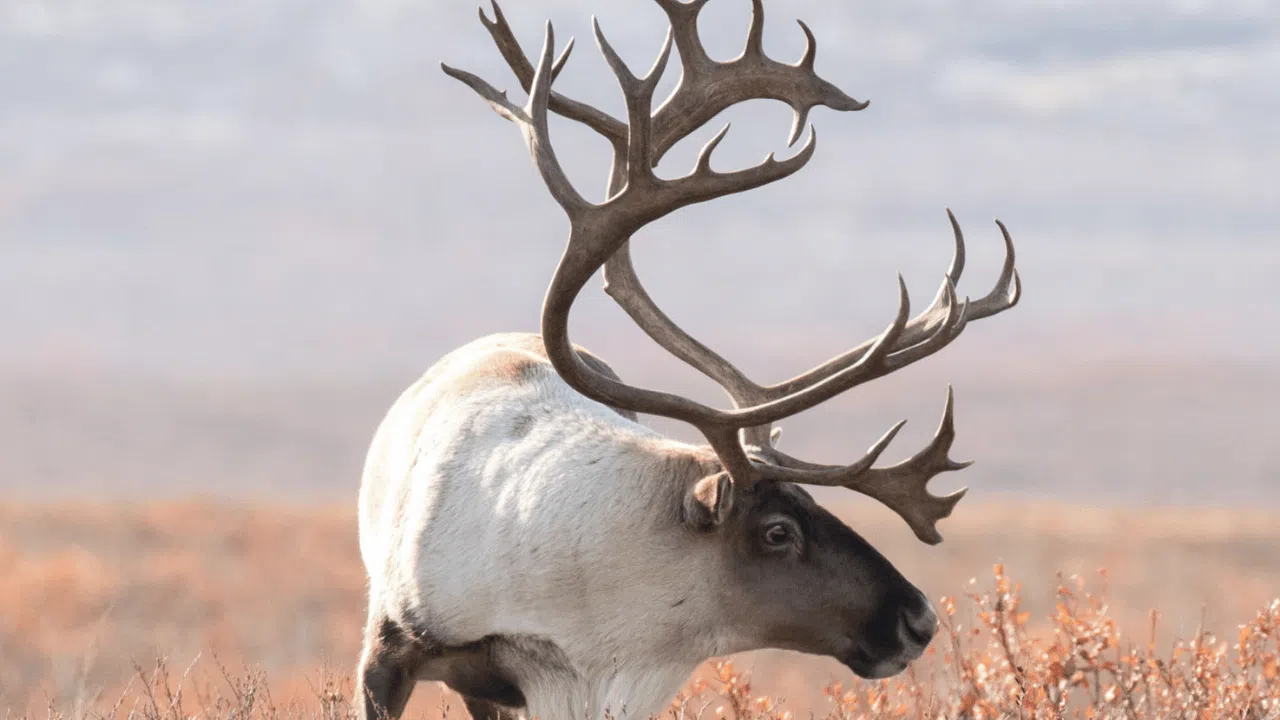
Characteristics
- Both males and females grow antlers, which are complex and vary in shape.
- Coat color changes from brown in summer to lighter shades in winter for camouflage.
Habitat
- Distributed across Canada, from the boreal forests to the Arctic tundra.
- Different subspecies inhabit specific regions, such as Woodland Caribou in the boreal forest and Barren-ground Caribou in the tundra.
Behavior
- Highly migratory, traveling great distances in search of food and suitable calving grounds.
- Forms large herds during migration, providing protection and improving foraging efficiency.
Conservation Status
- Vulnerable on the IUCN Red List, with some populations in Canada listed as Threatened or Endangered under SARA.
Black-tailed Deer (Odocoileus hemionus columbianus)
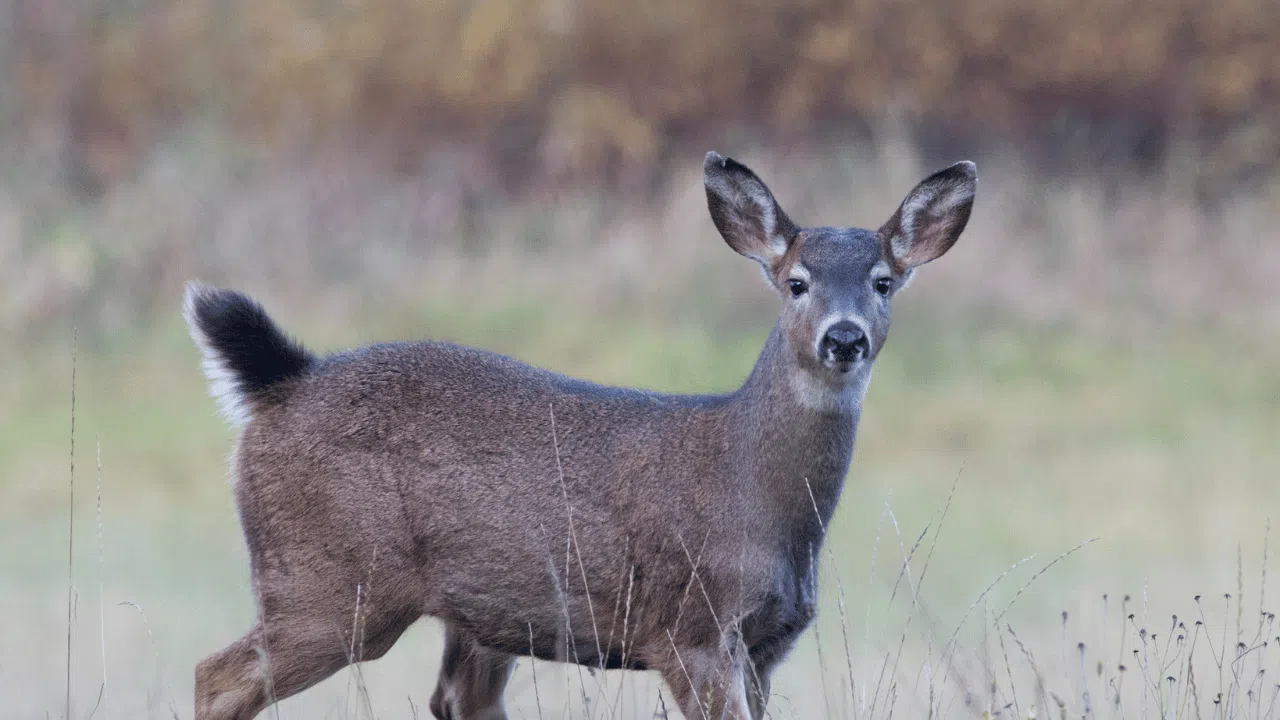
Characteristics
- A subspecies of Mule Deer with a distinctive black tail.
- Smaller and darker than other Mule Deer, with similar forked antlers.
Habitat
- Found along the coastal regions of British Columbia.
- Prefers dense forested areas and coastal ranges.
Behavior
- Similar to Mule Deer, with crepuscular activity patterns.
- Often seen in small groups, especially during winter months.
Conservation Status
- Least Concern but monitored due to habitat loss in coastal areas.
Sika Deer (Cervus nippon)

Characteristics
- Medium-sized deer with a reddish-brown coat that features white spots, which remain throughout adulthood.
- Males grow antlers that are branched, with multiple points.
Habitat
- Originally native to East Asia but have been introduced to various parts of North America, including some areas of Canada.
- Prefers forested areas with mixed open clearings and dense vegetation.
Behavior
- Primarily crepuscular, active during dawn and dusk.
- Known to graze on grasses, leaves, shoots, and fruits, and browse on woody plants during winter.
Conservation Status
- Least Concern globally, but their populations are monitored in areas where they have been introduced.
Vampire Deer (Musk Deer – Moschus spp.)
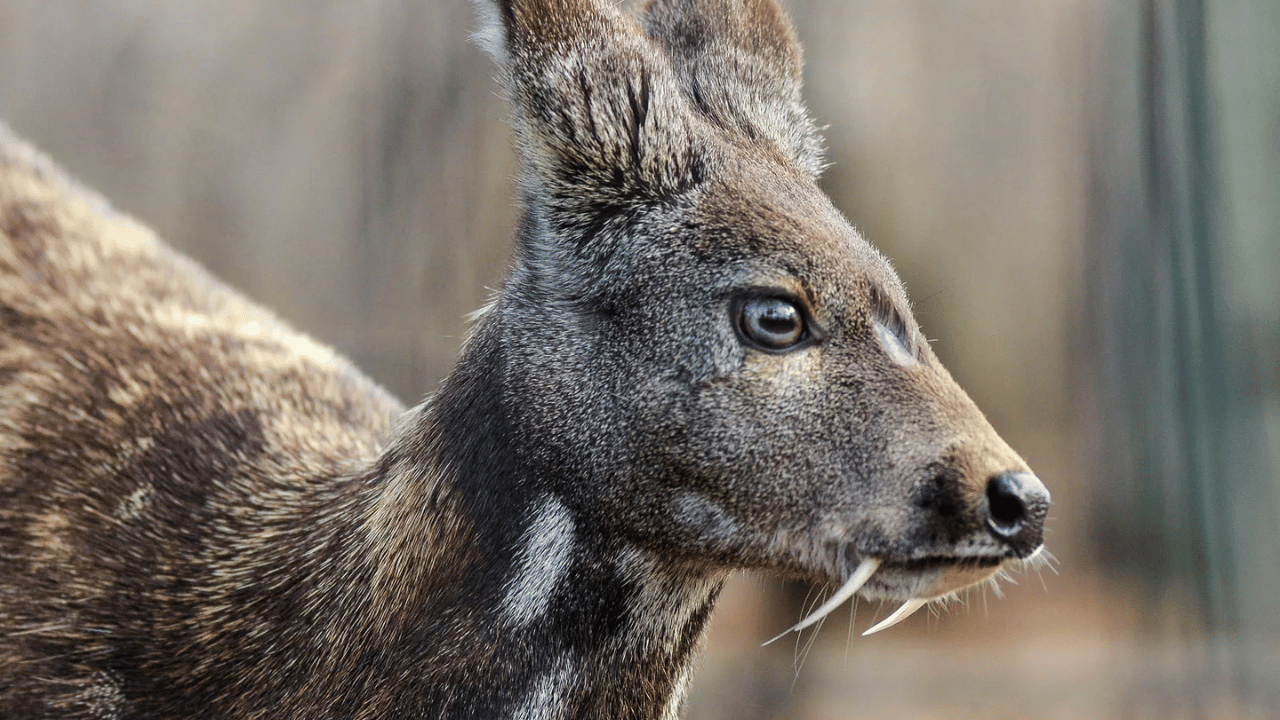
Characteristics
- Unlike other deer species, Vampire Deer do not grow antlers. Instead, males have long, sharp canine teeth that resemble fangs.
- Small in size, with a compact body and thick fur to withstand cold climates.
Habitat
- Native to the mountainous regions of Asia, but some individuals have been introduced in protected parks across North America.
- Prefers forested and rocky areas where they can easily hide from predators.
Behavior
- Solitary and nocturnal, often seen at night foraging for leaves, grasses, and mosses.
- Males use their “fangs” during mating disputes to display dominance.
Conservation Status
- Vulnerable due to habitat loss and poaching for their musk glands, which are used in traditional medicines.
Comparing Canadian Deer Species
Distribution and Habitat Preferences
- White-tailed Deer are the most adaptable, found in forests, fields, and even suburban areas.
- Mule Deer and Elk prefer open terrain, while Moose thrive in boreal forests and wetlands.
- Caribou occupy diverse environments, from tundra to boreal forests, depending on the subspecies.
- Black-tailed Deer are more restricted to coastal forest habitats in British Columbia.
- Sika Deer and Vampire Deer are found in specific regions, often in protected areas or as introduced populations.
Antler Differences
- White-tailed Deer and Mule Deer both have branching antlers, but Mule Deer have a characteristic forked structure.
- Moose have broad, palmate antlers, while Elk have tall, sweeping antlers.
- Caribou are unique in that both males and females grow antlers, with distinct forward-projecting sections.
- Black-tailed Deer have similar forked antlers to Mule Deer but are generally smaller.
- Sika Deer have branched antlers, and Vampire Deer lack antlers entirely, instead having long canines.
Behavioral Differences
- Elk are the most social, forming large herds, while Moose are generally solitary.
- Caribou are known for their extensive migrations, unlike the more localized movements of other species.
- Black-tailed Deer are less migratory and prefer coastal environments, often staying within smaller ranges.
- Sika Deer are adaptable and social, often forming small herds, while Vampire Deer are solitary and nocturnal.
Managing Deer Interactions
Tips for Attracting Deer
Although property owners with large acreage can provide significant deer habitat, those with small acreage can also contribute. Keep in mind that deer may damage ornamental plants and gardens and might attract predators like cougar and bear.
- Provide Hiding Cover: Deer need hiding cover year-round, particularly during hunting season and the first few months of a fawn’s life. Dense shrubs or stands of trees offer the perfect cover.
- Conserve Forage Areas: Preserve areas with forage plants that deer prefer, such as serviceberry, snowbush, and juniper.
- Conserve Freshwater Vegetation: Deer favor areas near streams and freshwater, so conserving vegetation in these areas is crucial.
Landscaping with Deer-Resistant Plants
While attracting deer can be rewarding, managing deer interactions also means protecting certain parts of your property from damage. Using deer-resistant plants is an effective strategy to deter deer from certain areas without using barriers or repellents.
- Deer-Resistant Plant Options: Consider planting evergreen shrubs like juniper or salal, deciduous trees like birch and sumac, or perennial flowers like yarrow and coneflower. These plants are less likely to be browsed by deer.
- Create Mini Barriers: Mini barriers around vulnerable plants can also help. Deer-resistant plantings combined with strategic barriers can minimize damage while maintaining an inviting habitat.
For more information on managing deer interactions, you may find our article on Wildlife-Friendly Landscaping: Balancing Attraction and Protection helpful.
Conservation Challenges and Efforts
Threats to Populations
- Habitat Loss: Urbanization and development have led to habitat fragmentation, particularly for Woodland Caribou, Moose, Black-tailed Deer, and introduced populations like Sika Deer.
- Climate Change: Warming temperatures impact food availability, especially for Caribou, which rely heavily on lichens in winter.
- Human Activities: Increased road networks, hunting, and land development have contributed to declines in some populations.
Conservation Initiatives
- Species at Risk Act (SARA): Protects vulnerable populations, particularly Caribou and specific Moose populations.
- Habitat Restoration: Efforts are underway to restore critical habitats, especially for Caribou, Black-tailed Deer, and introduced species like Sika Deer, which are highly sensitive to habitat changes.
Deer Hunting Regulations in Canada
Legal and Illegal Deer for Hunting
In Canada, the legality of hunting specific deer species varies by province and territory, depending on population stability, conservation status, and specific regional regulations.
Legal to Hunt:
- White-tailed Deer and Mule Deer are commonly hunted throughout many provinces, including Ontario, British Columbia, and Alberta.
- Elk and Moose are also legally hunted in many areas, though regulations are strict to ensure sustainable populations.
Illegal to Hunt:
- Columbian White-tailed Deer are Endangered and fully protected under Canadian law, making hunting illegal.
- Specific populations of Caribou, such as the Woodland Caribou, are also off-limits due to their vulnerable or endangered status.
Hunters must check provincial hunting regulations for specific species quotas, deer seasons, and licensing requirements to ensure compliance with the law.
Hunting Rules and Gear for Deer Hunting
- Licensing: All hunters require a valid hunting license, which may vary based on the type of deer being hunted and the province.
- Seasonal Restrictions: Hunting seasons differ by species and region, typically opening in fall. Some areas have special archery or muzzleloader seasons.
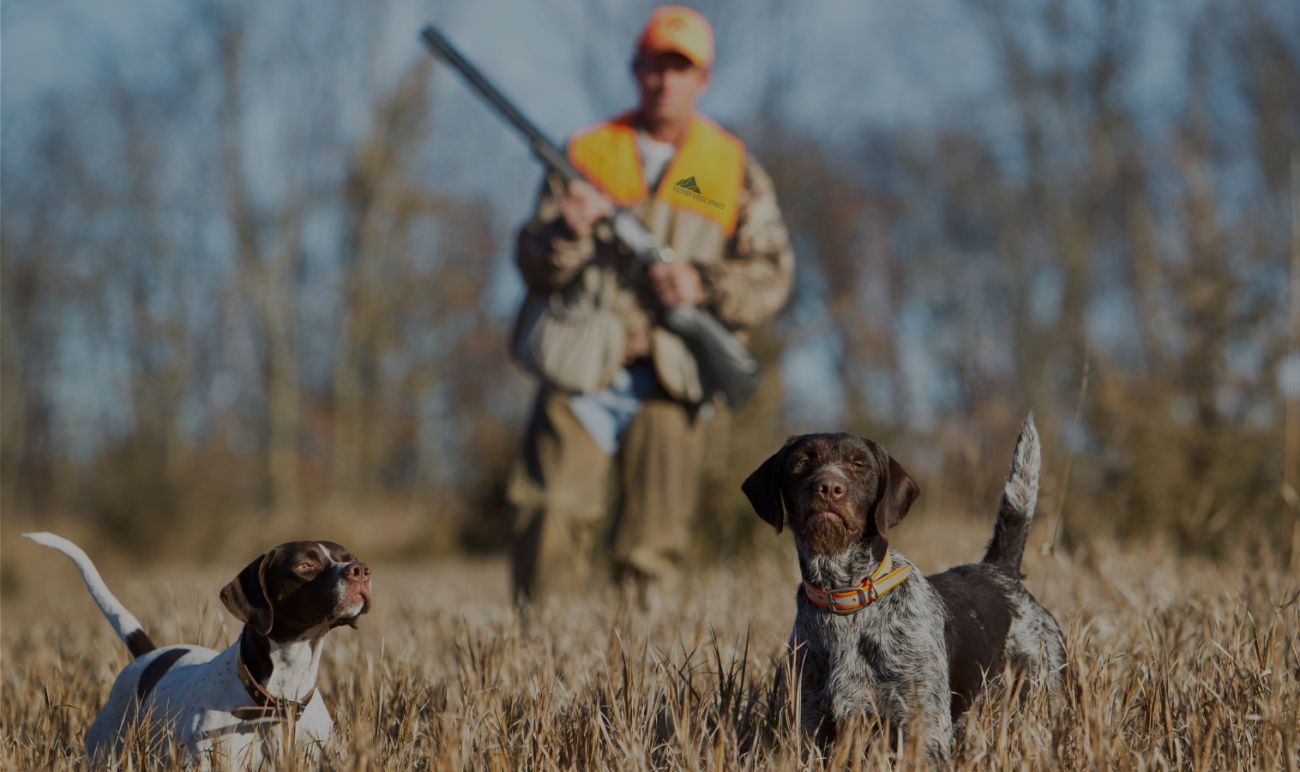
- Safety Protocols: Hunters must wear hunter orange during rifle seasons for visibility and follow regulations related to safe shooting distances from dwellings and roads.
Recommended Hunting Gear:
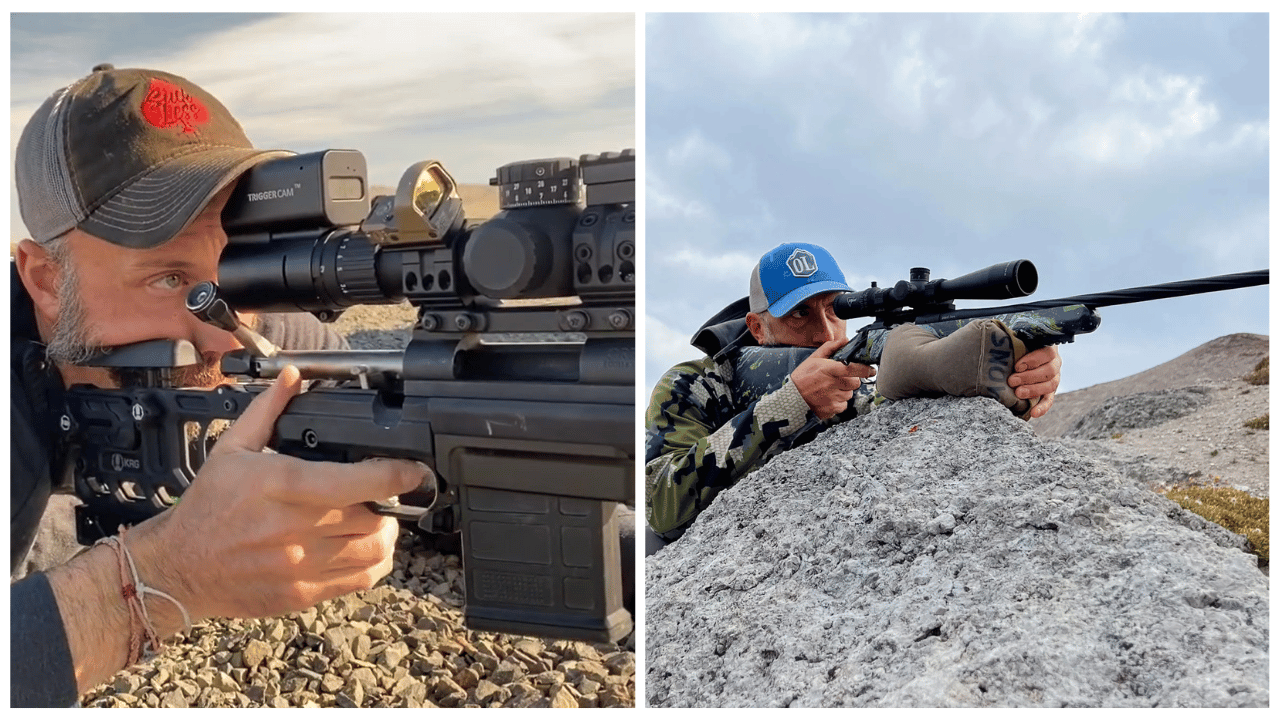
- Firearms: Rifles are most commonly used for deer hunting, but shotguns and muzzleloaders are also allowed in some areas. Archery equipment, such as compound bows or crossbows, is popular during dedicated archery seasons.
- Optics: Binoculars and rifle scopes are crucial for spotting deer and ensuring accurate shots.
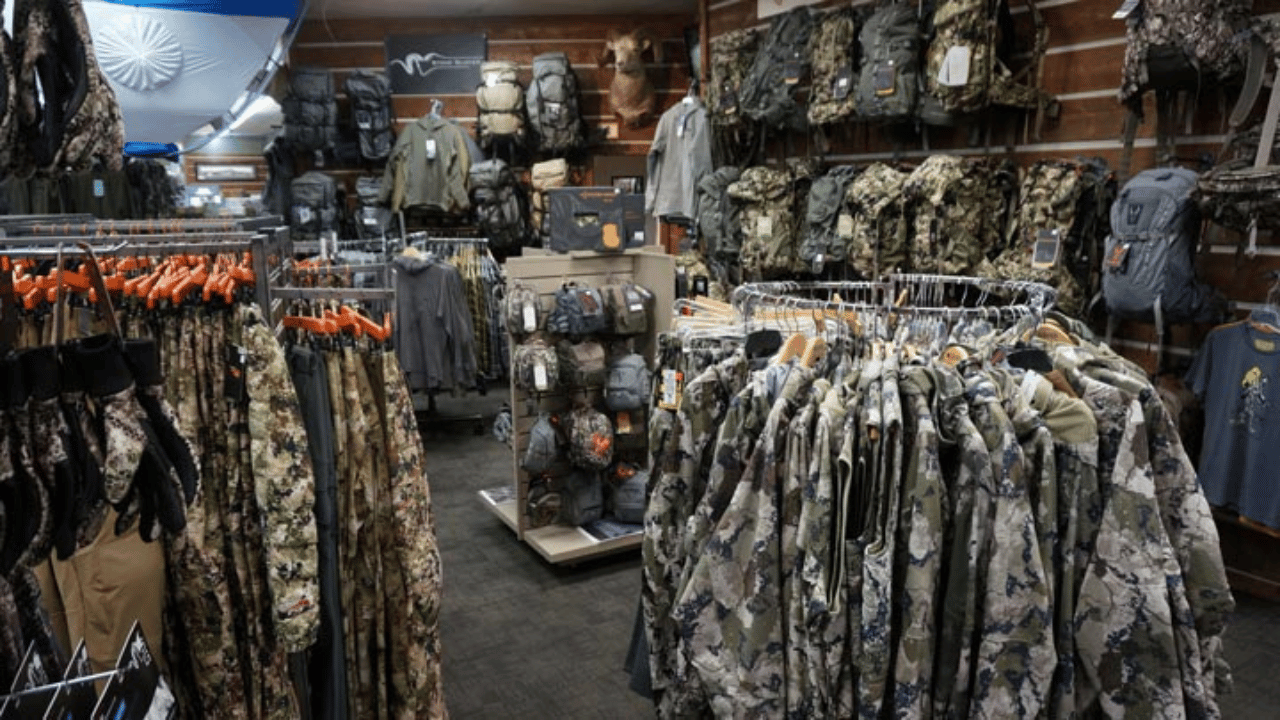
- Camouflage and Scent Control: Effective camouflage clothing and scent control products help hunters remain undetected by deer.
- Shooting Rest: A shooting stick or bipod provides stability for accurate shooting, especially at longer distances.
For more information on hunting regulations, visit Canada’s Hunting and Gun Stores.
Conclusion
The diverse types of deer species in Canada are a testament to the country’s rich biodiversity, each species playing a unique role in the ecosystem. Understanding their characteristics, behaviors, and conservation needs helps us appreciate these majestic animals and the importance of protecting their habitats.
To learn more about conservation efforts in Canada, check out our related post on Protecting Canada’s Wildlife: Strategies for Sustainable Habitats.